Roland Garros 2026: Drama, Heat, and High Stakes on the Red Clay
The atmosphere in Paris is electric as the 2026 French Open enters its second round. With the sun beating down on the iconic red clay of Roland Garros, players are facing not only their toughest opponents but also challenging weather conditions that are testing their endurance to the limit.
Spotlight on the Court: Marco Trungelliti’s Grit
Among the most anticipated clashes in the early stages, Marco Trungelliti has found himself in a grueling battle against the powerful Karen Khachanov. In a match defined by intensity and strategic baseline play, Khachanov managed to secure an early break, putting Trungelliti on the defensive early in the first set.
For fans of Marco Trungelliti, the match is a testament to his resilience. Known for his tenacity on clay, Trungelliti continues to fight for every point, embodying the spirit of the underdog in one of tennis’ most demanding environments.
Shockwaves and Powerhouses: The State of the Draw
While some seeds are cruising through, the 2026 tournament has already delivered a massive shock. In a result that has sent ripples through the ATP Tour, world No. 6 Daniil Medvedev was knocked out by Australian wildcard Adam Walton. The match was a five-set marathon, eventually ending in a 6-4 victory for Walton in the final set.
Meanwhile, the heavy hitters are making their presence felt:
- n
- Iga Świątek (3) continues her dominance in the women’s singles.
- Novak Djokovic and Alex Zverev are set to face Valentin Royer and Tomáš Macháč, respectively, as they eye another title.
- Jannik Sinner progressed comfortably in straight sets, defeating Clement Tabur.
The Architectural Jewel: Court Simonne-Mathieu
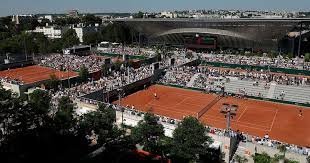
Beyond the scores, Roland Garros continues to dazzle with its infrastructure. A highlight of the grounds is the Court Simonne-Mathieu, a stunning “greenhouse jewel” designed by Marc Mimram. Built 4.5 metres below ground, this court blends cutting-edge engineering with the natural beauty of the surroundings, offering a unique, intimate atmosphere that often turns into a “bearpit” of passionate cheering.
The Secret of the Red Clay
What makes the French Open so distinct? It’s all in the dirt. For over half a century, the clay used at Roland Garros has been sourced from a single factory in Oise, north of Paris. Every year, roughly 2,000 tonnes of specifically crushed bricks—those with imperfections unsuitable for construction—are processed into a fine sand.
These particles, less than one-tenth of a millimetre in size, create the perfect surface for the strategic sliding and long rallies that define clay-court tennis.
A Legacy of Trophies and Tradition
The ultimate goal for every athlete here is to lift the prestigious trophies. The men compete for the Coupe des Mousquetaires, named after the legendary Four Musketeers of French tennis. In the women’s draw, the winner claims the Coupe Suzanne Lenglen, honoring the inaugural world No. 1 from the 1920s.
As we move further into the tournament, the question remains: who will conquer the heat and the clay to claim glory in Paris? Stay tuned for more updates on Marco Trungelliti and the road to the finals!