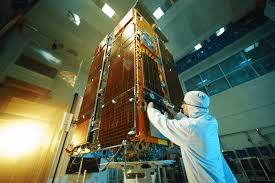
The Regulatory Breakthrough: A New Era for AST SpaceMobile
For investors tracking ASTS stock, April 21, 2026, will be remembered as a pivotal date. The Federal Communications Commission (FCC) has officially granted AST SpaceMobile the green light to deploy and operate a massive constellation of 248 satellites. This authorization isn’t just a regulatory formality; it is the culmination of a grueling five-and-a-half-year licensing battle, effectively transforming the company from a speculative venture into a legitimate operator of direct-to-device cellular coverage in the United States.
This move positions AST SpaceMobile as a formidable challenger in the satellite broadband sector, bridging the gap between traditional space communications and the smartphones we carry in our pockets every day.
Breaking Down the FCC Approval: What It Actually Means
The FCC’s decision provides two critical pillars for the company’s growth:
- Constellation Expansion: Modification of their existing license to allow for up to 248 non-geostationary orbit (NGSO) satellites.
- Spectrum Access: Permission to provide Supplemental Coverage from Space (SCS) using the 700/800 MHz low-band spectrum, provided by their partner mobile network operators.
Unlike traditional satellite internet, which requires bulky dishes or specialized hardware, AST SpaceMobile’s technology uses 223-square-meter phased-array transmitters. These allow standard smartphones to connect directly to satellites orbiting between 425 and 690 kilometers, offering a seamless extension of cellular networks.
Strategic Alliances: The Competitive Edge
One of the strongest catalysts for ASTS stock is the company’s partnership model. Instead of trying to build a terrestrial network from scratch, AST SpaceMobile has aligned itself with industry giants: Verizon, AT&T, and FirstNet.
This collaboration is a masterstroke for two reasons: it secures immediate access to essential spectrum and integrates their service directly into existing carrier plans. This synergy significantly reduces the cost of customer acquisition and provides a massive competitive advantage over independent operators who lack established carrier ties.
The Financials: High Stakes and High Rewards
While the regulatory path is clear, the financial landscape remains complex. As of Q1 2026, the company reported:
- Revenue: $14.7 million
- Net Loss: $191 million
- Cash Reserves: $3.5 billion
The substantial cash pile provides a necessary runway, but the capital intensity of launching the BlueBird satellites is immense. To maintain their FCC license, ASTS must hit strict milestones: 50% of the constellation must be operational by August 2, 2030, with full deployment by 2033. Failure to meet these deadlines could result in the forfeiture of their license.
Risks and Roadblocks: The Battle for the Skies
Investment in ASTS stock is not without risk. The company faces several formidable challenges:
- Launch Constraints: With providers like SpaceX and Blue Origin operating at near-full capacity, securing dedicated launch windows is a constant struggle.
- Manufacturing Scale: Ramping up the production of BlueBird satellites from a few dozen to hundreds per year is a massive industrial hurdle.
- The Starlink Factor: SpaceX’s Starlink, in partnership with T-Mobile, is already in the race. While ASTS claims superior low-band coverage, the first-mover advantage of Starlink cannot be ignored.
Final Verdict: Should You Watch ASTS?
The removal of the regulatory “overhang” has shifted the narrative for AST SpaceMobile from “Can they do it?” to “Can they execute?” For the long-term investor, the focus now shifts to the Q2 and Q3 2026 launch schedules and commercial trial results from Verizon and AT&T.
If AST SpaceMobile can successfully scale its production and maintain its launch cadence, it could redefine global connectivity. However, until revenue begins to scale and the net losses narrow, ASTS remains a high-reward, high-risk play in the burgeoning space economy. For more official regulatory updates, you can visit the Federal Communications Commission website.