
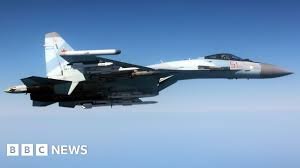
High-Stakes Confrontation: Russian Fighter Jets Target RAF Spy Plane
In a chilling display of aerial aggression, two Russian warplanes recently carried out a series of “repeated and dangerous” interceptions of an unarmed reconnaissance aircraft belonging to the Royal Air Force (RAF). The incident, which unfolded over the Black Sea, has sparked international concern regarding the safety of international airspace and the increasing volatility of the region.
A Near-Miss in the Clouds
According to the Ministry of Defence (MoD), the encounter involved a Russian Su-35 fighter and a Su-27 jet. The aggression was not merely intimidatory but technically disruptive. The Su-35 approached the RAF’s Rivet Joint surveillance aircraft so closely that it triggered the plane’s emergency systems, effectively disabling its autopilot.
The situation escalated further when a Su-27 jet performed six separate passes in front of the British aircraft, coming within a perilous six metres (19ft) of its nose. Such maneuvers are widely considered unacceptable in international aviation, posing a severe risk of mid-air collision.
The Role of the RC-135W Rivet Joint
The aircraft at the center of this controversy, the RC-135W Rivet Joint, is far from a standard plane. Operated by No 51 Squadron, this sophisticated reconnaissance aircraft is designed for strategic intelligence gathering. Its primary functions include:
- n
- Signal Interception: Capturing and analyzing signals across the electromagnetic spectrum.
- Tactical Intelligence: Providing real-time data to support strategic military decisions.
- NATO Support: Conducting routine flights to secure NATO’s eastern flank against potential threats.
A Pattern of Russian Aggression
Defence Secretary John Healey has condemned the actions, describing them as “unacceptable” and a “serious risk of accidents and potential escalation.” This event is not an isolated incident; it echoes a dangerous encounter in September 2022, where a “rogue” Russian pilot fired missiles at a Rivet Joint over the same waters.
While Russia previously claimed that the 2022 incident was a “technical malfunction,” Western intelligence sources suggest otherwise, pointing toward ambiguous commands from ground stations. This latest interception, combined with reported Russian submarine activity near British underwater infrastructure in the North Sea, paints a picture of growing hostility.
Commitment to International Security
Despite the provocation, the UK government remains steadfast. Minister Healey emphasized that these dangerous flybys will not deter the UK’s commitment to defending its allies and interests from Russian aggression. The MoD and the Foreign Office have officially called upon the Russian embassy to condemn the behavior of its pilots.
For more detailed information on the capabilities of the UK’s air fleet, you can visit the official Royal Air Force website.



