
The Erosion of Democracy: How Gerrymandering is Splitting the United States
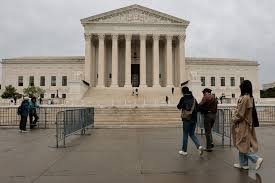
Can American politics become even more divided than it has been over the last two decades? For many political analysts, the answer is a resounding yes. A recent landmark decision by the U.S. Supreme Court has sent shockwaves through the democratic system, effectively gutting key provisions of the Voting Rights Act of 1965—a piece of legislation long considered the “crown jewel” of the civil rights movement.
The Death of Fair Representation?
The crux of the issue lies in a Supreme Court ruling that stripped away protections designed to prevent the dilution of minority ethnic votes during electoral redistricting. This decision has opened the floodgates for gerrymandering—the practice of manipulating the boundaries of an electoral constituency to favour one party or class.
“What we are observing is that our division, our policies, and our ideology are becoming deeply embedded in the very rules of the electoral system,” warns Erik Nisbet, a political scientist at Northwestern University.
A ‘Race to the Bottom’ in the Electoral Map
Immediately following the ruling, several Republican-led Southern states—including Louisiana, Tennessee, Alabama, and South Carolina—began redrawing their electoral maps. The goal? To secure more seats for Republican candidates in the House of Representatives and, in some cases, potentially eliminate Black representation in Washington.
However, this isn’t a one-sided battle. Democratic-led states like New York, California, and Virginia have attempted to implement their own strategic redistricting to maintain their edge. As New York Governor Kathy Hochul aptly put it, it has become a matter of “fighting fire with fire.”
The Danger of Non-Competitive Seats
The consequences of this systemic manipulation are dire for the health of the Republic. According to the Cook Political Report, the number of “toss-up” seats in the House of Representatives is plummeting. In 2026, only 19 out of 435 seats are expected to be truly competitive.
- Hyper-Polarization: When 95% of seats are safe for one party, the only real contest happens during the primary elections.
- Loss of Moderation: Moderate candidates are pushed out in favour of ideological extremists.
- Presidential Overreach: A gridlocked and divided Congress fails to act as a counterweight to the presidency, forcing presidents to govern via executive orders.
Beyond the Ballot: A Snapshot of Current US Tensions
While the battle for voting rights dominates the headlines, other events highlight the volatile climate of current US politics:
- Civil Rights & Hate Crimes: Investigations are underway following a tragic attack on a mosque in San Diego, underscoring rising social tensions.
- Legal Battles: The New York Times has filed suit against the Department of Defense, arguing that restrictive escort requirements at the Pentagon violate the First Amendment.
- Institutional Conflict: The Trump administration’s proposal of a $1.8 billion “anti-instrumentalization” fund has been slammed by Democrats as a “black box” for political allies.
- International Diplomacy: Unconventional diplomatic moves continue, including recent US emissary visits to Greenland.
Conclusion: The Future of the American Experiment
The shift toward a system where election results are predetermined by map-makers rather than voters is a dangerous trajectory. If the House of Representatives begins to mirror the winner-take-all nature of the Electoral College, the US risks a permanent state of political instability. For those who value democratic integrity, the fight to protect the Voting Rights Act is more than a legal battle—it is a fight for the soul of the nation.



