
From Local Waters to the Frozen South: The Fight Against Plastic Pollution
The scale of plastic pollution in our oceans is staggering. Imagine a floating mass of debris twice the size of Texas, containing an estimated 100,000 tonnes of plastic. This is the Great Pacific Garbage Patch, a grim reminder of humanity’s environmental footprint. With approximately 250 pieces of plastic for every person on Earth floating in the Pacific, the crisis is no longer a distant threat—it is a tangible reality.
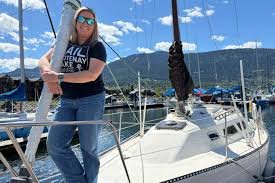
For Penny Caldwell, a seasoned sailor from Nelson, British Columbia, this reality became personal during a voyage from Hawaii to Victoria in 2018. Despite choosing a route to avoid the garbage patch, she encountered barrels and discarded fishing gear in the most remote corners of the ocean. This awakening sparked a lifelong commitment to ocean stewardship.
The Invisible Enemy: Microplastics
While large pieces of debris are alarming, the true danger often lies in what we cannot see. Plastic is not biodegradable; instead, it fragments into microplastics. These tiny particles are ingested by marine wildlife and eventually enter the human food chain, posing significant health risks to all living beings.
The statistics provided by the United Nations Environment Programme (UNEP) are sobering:
- n
- 11 million metric tons of plastic enter the oceans every year.
- By mid-century, the UN estimates there could be more plastic than fish in the sea.
Mission to Antarctica: Joining the eXXpedition
In late 2026, Penny Caldwell will elevate her commitment to the environment by joining eXXpedition, an all-women team of scientists and sailors. This daring expedition will take her through the treacherous Drake Passage to the coasts of Chile and Antarctica.
The mission is clear: map the extent of microplastic pollution in some of the world’s most remote waters and trace these pollutants back to their terrestrial sources. By gathering this critical data, the team aims to provide communities with the evidence needed to address pollution at its root.
A Local Heart with a Global Vision
Penny’s passion for the water began in childhood, sailing the St. Lawrence River near Montreal. Today, as a coach with Sail Canada and the operator of Sail Nelson on Kootenay Lake, she sees the effects of pollution even in Canada’s inland waters. From Styrofoam shards to beach debris, the battle against waste is a local struggle as much as a global one.
“The water’s my playground. It’s in my best interest to make sure that I’m a steward for it and that it’s going to be around for a very, very long time.” — Penny Caldwell
What This Means for the Future
Upon her return, Caldwell plans to bring her findings into local classrooms, inspiring the next generation to rethink their relationship with plastic. Her journey serves as a powerful reminder that whether we are navigating a local lake or the depths of the Antarctic, we all share the responsibility of protecting our blue planet from the devastating effects of plastic pollution.



