
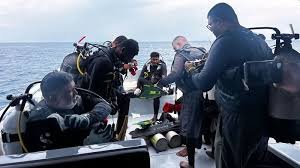
Tragedy in Paradise: The Maldives Scuba Diving Accident and the Perilous Recovery Mission
The Maldives is world-renowned for its crystal-clear waters and vibrant marine life, but a recent Maldives scuba diving accident has turned this island paradise into a scene of mourning and high-stakes rescue operations. A group of experienced Italian divers encountered a nightmare in the depths of the Vaavu Atoll, leading to a multinational effort to recover those lost in one of the region’s most dangerous underwater environments.
The Heartbreaking Incident at Vaavu Atoll
The tragedy unfolded when five Italian citizens ventured into a complex, maze-like underwater cave system. While one member of the group decided not to dive, the others descended into the abyss. Only one body, that of diving instructor Gianluca Benedetti, has been recovered so far, found at the mouth of the cave.
The search continues for the remaining four victims, including:
- n
- Monica Montefalcone – Associate professor of ecology at the University of Genoa
- Giorgia Sommacal – Daughter of Monica Montefalcone
- Federico Gualtieri – Marine biologist
- Muriel Oddenino – Researcher
A High-Risk Recovery Operation
Recovering remains from a deep-sea cave is a task that pushes the limits of human endurance and technology. The cave in question is approximately 200 meters long and reaches depths of 70 meters (roughly the height of a 20-story building).
To tackle this, the Maldivian government has partnered with the Divers Alert Network (DAN), bringing in Finnish cave diving experts. The mission is supported by specialized equipment from the United Kingdom and Australia, including underwater scooters and advanced gas tanks designed to recycle air for extended bottom times.
The Cost of Bravery
The peril of this mission was tragically highlighted when Sgt. Mohamed Mahudhee, a senior Maldivian military diver, lost his life during a recovery attempt. Authorities believe he suffered from decompression sickness—a dangerous condition caused by rapid pressure changes during ascent. His sacrifice underscores the extreme risks involved in deep-cave exploration.
Why Deep Cave Diving is So Dangerous
Experts, including those from the British Cave Rescue Council, point to several factors that make this specific Maldives scuba diving accident so complex:
- n
- Silt and Visibility: In cave environments, touching the floor or walls can stir up silt, instantly reducing visibility to zero.
- Nitrogen Narcosis: At depths beyond 30 meters, divers can experience an intoxicating effect known as “narcosis,” which impairs judgment and can lead to panic.
- Narrow Passageways: The morphology of the cave involves tight spaces and unpredictable strong currents that can trap or disorient divers.
Investigation and Legal Controversies
An official investigation is currently underway to determine how the divers reached such extreme depths. Under Maldivian law, recreational and commercial diving is strictly limited to 30 meters. The cave’s entrance alone is nearly 50 meters deep, suggesting a serious breach of safety protocols.
While the vessel’s license has been suspended, the Italian tour operator involved has denied any knowledge of the deep-dive plan, claiming the group used standard recreational gear rather than the technical equipment required for such a hazardous descent.
A Bond of Grief and Solidarity
Despite the tragedy, the incident has strengthened the emotional bond between Italy and the Maldives. With Italy being one of the largest tourism markets for the archipelago, the local community has expressed profound grief over the loss of their guests.
As the international team continues its cautious approach—prioritizing diver safety over speed—the world waits and hopes for the recovery of the remaining four Italians, ensuring they can finally return home to their families.



