
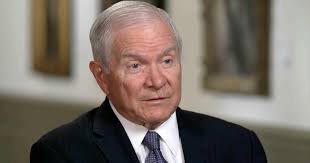
A World on the Edge: Robert Gates Warns of Modern Security Risks
In a gripping and transparent conversation on Face the Nation, Margaret Brennan sat down with former Defense Secretary Robert Gates to dissect the current state of global stability. Gates didn’t mince words, describing the present moment as perhaps the most dangerous period in modern American history. From the rise of nuclear-armed adversaries to internal fractures within the U.S. military apparatus, the dialogue revealed a landscape fraught with tension and unpredictability.
The Dragon and the Bear: The US-China-Russia Triangle
One of the most striking points raised during the interview with Margaret Brennan was the unprecedented challenge posed by China and Russia. Gates highlighted a terrifying reality: for the first time, the United States faces nuclear-armed adversaries in both Europe and Asia simultaneously.
Regarding the U.S.-China relationship, Gates analyzed the concept of a “near peer,” noting that while the U.S. maintains an economic and technological edge, China is rapidly closing the gap, particularly in shipbuilding and industrial capacity. The conversation shifted toward the volatile situation in Taiwan, where Gates emphasized the importance of strategic ambiguity.
- n
- The Taiwan Dilemma: Gates argues against changing the U.S. position on Taiwan, fearing that any shift in nuance could trigger an unnecessary escalation.
- The “Anaconda Strategy”: Rather than a full-scale invasion, Gates warns that China might employ a blockade to slowly strangle Taiwanese democracy.
- Arms Sales: He advocated for the immediate delivery of promised weaponry to ensure Taiwan can defend against an amphibious invasion.
The Defense Industrial Crisis: A Call for a “Wartime Economy”
A recurring theme in the discussion was the alarming state of the U.S. defense industrial base. Gates pointed out a significant lag in replenishing stockpiles of precision-guided munitions and defensive missile systems like the Patriot and THAAD systems.
Comparing the U.S. to Ukraine’s aggressive drone production, Gates suggested that the United States must adopt a wartime economy mindset. He criticized the slow and unpredictable flow of funding from Washington, asserting that rhetoric about “increasing capacity” is meaningless without accelerated action and factory expansion.
The Iranian Nuclear Puzzle and the Netanyahu Critique
When Margaret Brennan pivoted to the Middle East, Gates offered a pragmatic view on Iran. He argued that while military strikes can damage infrastructure, the only permanent solution to remove enriched uranium is through negotiation.
Gates also revisited his long-standing friction with Prime Minister Benjamin Netanyahu. He recalled a 2009 disagreement where he told Netanyahu that the Iranian regime was far more resilient than the Israeli leader believed. Gates maintains that the idea of an Iranian uprising following a strike is largely unrealistic, as internal controls remain tightly gripped by the regime.
Internal Turmoil: The Pentagon and the “Warrior Ethos”
The interview took a sharp turn toward domestic military politics, specifically the performance of Secretary Hegseth. Gates expressed concern over the lack of transparency regarding the firing of numerous high-ranking military officials, including the Navy Secretary and the Army Chief of Staff.
Addressing the controversial claims that certain universities are “woke breeding grounds,” Gates defended the role of academic institutions like William & Mary, calling the characterizations “badly misinformed” and highlighting the strong relationship between top universities and the U.S. Department of Defense.
Final Thoughts: A Fragile Balance
The conversation between Margaret Brennan and Robert Gates serves as a stark reminder that global peace is not a default state, but a fragile balance maintained by deterrence, diplomacy, and industrial readiness. As the world watches the interplay between the “G2” powers and the volatility of the Middle East, the insights provided by a veteran like Gates are more critical than ever.



