
The Rise of Ghost Cars: Waymo’s Autonomous Fleet in Atlanta
The streets of Atlanta are witnessing a futuristic transformation. Waymo, the leader in autonomous driving technology, has integrated its self-driving fleet into the city’s ride-sharing ecosystem via Uber. While the promise of driverless mobility is exciting, a growing number of residents in northwest Atlanta are finding the reality less than seamless.
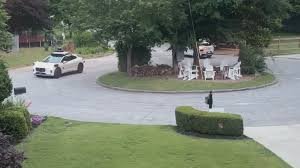
For the people living on Battleview Drive, the innovation has turned into a daily disturbance. Residents report that dozens of empty Waymo vehicles frequently circle their quiet cul-de-sacs, often in the early hours of the morning, with no passengers on board.
When AI Meets Residential Reality
The situation escalated recently, with some neighbors claiming that as many as 50 autonomous cars passed through their street in a single hour. This unexpected surge in traffic has raised significant alarms regarding safety and privacy.
The “Cul-de-Sac Chaos”
- n
- Unexpected Traffic: High volumes of empty cars circling residential dead-ends.
- Safety Concerns: Parents express fear for children waiting for school buses and pets roaming the neighborhood.
- The “Blockade” Incident: In a desperate attempt to stop the traffic, one resident placed a “Step2Kid” sign in the street. The result? Eight Waymo cars became stuck, unable to figure out how to navigate around the obstacle and turn around.
n
n
n
Local residents have reached out to the Georgia Department of Transportation and city council members, arguing that there is no logical reason for empty AI-driven cars to navigate small residential streets if they aren’t picking up a passenger.
Waymo’s Response: Balancing Tech and Community
When questioned about the routing issues in Atlanta, Waymo emphasized its commitment to being a “good neighbor.” The company stated that they take community feedback seriously and have already taken steps to address the specific routing behavior causing the disruption.
Waymo maintains that its service is a net positive for urban mobility, citing over 500,000 weekly trips nationwide and claiming that their technology significantly reduces traffic-related injuries compared to human drivers.
The Bigger Picture: The Future of Autonomous Vehicles
This incident highlights a critical challenge in the deployment of autonomous vehicle (AV) technology: the gap between algorithmic efficiency and human community needs. As AI continues to scale, companies must ensure that “optimization” doesn’t come at the cost of local residents’ peace and safety.
Whether Waymo can truly integrate into the fabric of Atlanta’s neighborhoods without causing friction remains to be seen, but the conversation is a vital step toward a more respectful co-existence between humans and robots on the road.



