
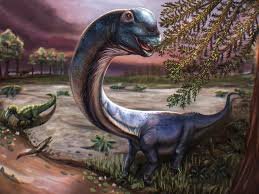
Meet the Giant: A Groundbreaking New Dinosaur Discovery in Southeast Asia
Imagine a creature so massive that its weight equals that of nine adult elephants. This isn’t a scene from a sci-fi movie, but a reality uncovered by paleontologists in Thailand. Scientists have officially identified Nagatitan chaiyaphumensis, a colossal new species that now holds the title of the largest known dinosaur from Southeast Asia.
This stunning new dinosaur discovery provides critical insights into the prehistoric landscape of Asia, shedding light on a time when titans roamed the Earth long before humans ever existed.
Who was Nagatitan chaiyaphumensis?
Nagatitan belongs to the sauropod lineage—a group of dinosaurs legendary for their towering stature, long necks, sweeping tails, and sturdy, columnar legs. According to a detailed report published in the prestigious Scientific Reports journal, this herbivore was a true behemoth of its time.
Key Physical Statistics:
- n
- Length: Approximately 27 metres (89 feet).
- Weight: Estimated at 27 tonnes.
- Era: Lived between 100 and 120 million years ago.
- Diet: High-volume vegetation, such as conifers and seed ferns.
Why it is Called “The Last Titan”
Lead researcher Thitiwoot Sethapanichsakul, a PhD student in palaeontology at University College London, has dubbed the species “the last titan.” This evocative name stems from the fact that Nagatitan was unearthed in one of the youngest rock formations in Thailand where dinosaur fossils are found.
Geologically, the region eventually transitioned into a shallow sea during the Cretaceous period. This environmental shift meant that the era of the great sauropods in Southeast Asia came to an end, making Nagatitan one of the final representatives of its kind in the region.
Comparing the Colossus
To put its size into perspective, Nagatitan likely outweighed Dippy the Diplodocus—the famous composite cast once displayed at the Natural History Museum in London—by at least 10 tonnes. While its head and teeth were not recovered among the fossils, its massive skeletal structure tells the story of a “bulk browser” that consumed vast amounts of greenery with minimal chewing.
From the Earth to the Museum
The journey of this new dinosaur discovery began a decade ago when locals in northeast Thailand first stumbled upon the remains. However, the meticulous process of excavation and analysis was only completed in 2024.
The name “Nagatitan” is a beautiful blend of science and culture, referencing the Naga—the mythical serpent-like beings deeply embedded in Asian religious traditions and frequently depicted in Thai temples.
For those eager to see this prehistoric giant in person, a life-size reconstruction of Nagatitan chaiyaphumensis is currently on display at the Thainosaur Museum in Bangkok, marking a proud addition to the 14 known dinosaur species identified in Thailand.



