
The US Travel Boycott: Analyzing Canada’s 2026 Border Trends and Shifting Tourism
For years, the border between Canada and the United States has been one of the busiest in the world. However, recent data suggests a deeper, more complex narrative. As political tensions simmer, a subtle but noticeable shift in travel behavior has emerged—what some are describing as a psychological or socio-political boycott of traditional travel routes.
According to the latest preliminary data for April 2026, international arrivals to Canada reached 4.7 million, marking a 3.5% increase compared to April 2025. While the surface numbers look positive, a closer look at the trends reveals a significant change in how Canadians perceive travel to their southern neighbor.
The Paradox of the Canadian-US Border
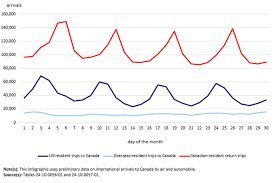
One of the most striking revelations in the April 2026 report is the contrast between short-term recovery and long-term decline. While Canadian-resident return trips from the United States saw a slight uptick of 1.4% compared to the previous year, this is largely attributed to a “base-year effect” rather than a full return to normalcy.
When we zoom out and compare April 2026 to April 2024, the picture changes drastically:
- n
- Overall decline: There has been a staggering 30.0% drop in trips made by Canadians to the US.
- Automobile travel: Road trips plummeted by 31.4%.
- Air travel: Flights to the US decreased by 26.4%.
This significant downturn suggests that the political climate has fostered a sentiment akin to a travel boycott, where Canadians are consciously or unconsciously choosing alternative destinations over the United States.
US Residents are Still Flocking to Canada
Interestingly, the sentiment isn’t mutual. US-resident trips to Canada are on the rise, reaching 1.2 million in April—a 7.3% increase. This growth is driven by both air travel (+10.8%) and automobile entries (+6.1%).
It seems that while Canadians are hesitant, the allure of Canada remains strong for Americans, particularly during holiday peaks like the Easter long weekend, where arrivals spiked significantly on Good Friday and Saturday.
Overseas Arrivals and Global Trends
While the North American dynamic is the main focus, overseas residents showed a slight decline, with 366,800 arrivals (down 3.1%). Most of these travelers arrived by air, though there was a sharp 19% decrease in those entering by automobile.
The Bottom Line: A Shifting Landscape
The data provided by Statistics Canada highlights a critical inflection point. The intersection of tourism and diplomacy is evident; travel is no longer just about leisure, but a reflection of geopolitical relationships.
As we move further into 2026, the question remains: will the perceived boycott of US travel continue, or will diplomatic shifts pave the way for a return to the high-volume crossings of 2024?
For those interested in deeper insights, the Frontier Counts Interactive Dashboard and the Travel and Tourism Statistics portal offer comprehensive data on these evolving trends.



