
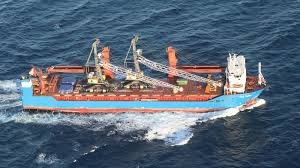
The Enigma of the Ursa Major: Nuclear Secrets at the Bottom of the Ocean
In the deep waters off the coast of Spain, a silent secret rests 2,500 meters below the surface. The Ursa Major ship, a Russian cargo vessel, didn’t just sink on December 23, 2024—it vanished under a cloud of explosions, international espionage, and high-stakes geopolitical tension. What appeared to be a routine maritime accident may actually be one of the most daring covert interventions of the decade.
A Secret Cargo: More Than Just “Manhole Covers”
On paper, the Ursa Major’s manifest was unremarkable. It claimed to be transporting cranes and “manhole covers” bound for Vladivostok. However, a deep-dive investigation reveals a far more sinister reality. According to Spanish investigators, the ship’s captain confessed that the vessel was actually carrying components for two nuclear reactors, similar to those used in submarines.
The suspected destination? North Korea. This shipment would have represented a massive leap in nuclear capability for Pyongyang, coming shortly after Kim Jong Un deployed troops to support Moscow’s invasion of Ukraine.
The Timeline of a Disaster
The descent of the Ursa Major into chaos was sudden and mysterious:
- December 22: The ship dramatically slowed in Spanish waters, though the crew insisted everything was fine.
- December 23 (11:53 AM UTC): Three violent explosions struck the starboard side, killing two crew members and leaving the ship listing.
- December 23 (9:50 PM): After a tense standoff between Spanish rescuers and the Russian escort ship Ivan Gren, four more explosions rocked the vessel.
- December 23 (11:10 PM): The Ursa Major officially sank into the Mediterranean.
Covert Warfare: Torpedoes or Sabotage?
How did a military-escorted ship sink so efficiently? Experts are divided. The Spanish investigation suggests the use of a Barracuda supercavitating torpedo—a high-speed weapon capable of piercing hulls without a traditional explosive charge, explaining the precise 50cm hole found in the wreckage. Others argue a limpet mine, placed by special forces, is a more likely culprit.
The mystery deepened when the Yantar, a notorious Russian spy ship, hovered over the wreckage a week later, triggering four additional explosions to possibly destroy evidence on the seabed.
The “Nuke Sniffers” and Global Tension
The United States has shown an intense interest in the site. Flight data reveals that the U.S. Air Force deployed WC135-R “nuke sniffer” aircraft—specialized planes designed to detect nuclear debris—over the sinking site on two separate occasions. While the U.S. military has remained tight-lipped, the presence of these aircraft suggests a fear of radioactive leakage or a need to confirm if nuclear material was indeed onboard.
Why This Matters for Global Security
If Russia was indeed transferring nuclear reactor technology to North Korea, it marks a dangerous escalation in the global arms race. For South Korea and the West, the prospect of North Korean nuclear-powered submarines would fundamentally shift the balance of power in the Pacific.
For more insights into global maritime security and naval intelligence, you can explore reports from CNN International or defense analytics from Janes.
The Ursa Major now serves as a watery grave for secrets that neither Moscow nor Washington is fully ready to reveal. Until the black box is recovered, the truth remains submerged.



