
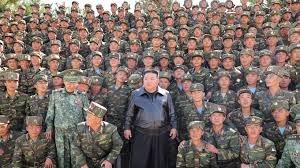
A Strategic Alliance Fueled by Billions
In a move that has sent shockwaves through the international community, North Korea has reportedly secured a massive economic boost by providing military assistance to Russia. According to reports from Nikkei Asia, citing South Korean intelligence, Pyongyang has earned an estimated $13 billion over the past three years by fueling Russia’s ongoing conflict in Ukraine.
For a nation that rarely releases official statistical data, this windfall is staggering. To put this into perspective, the United Nations estimated North Korea’s 2024 GDP at approximately $17.2 billion, while South Korea’s central bank placed it slightly higher at $25.3 billion. This influx of capital represents a significant percentage of the country’s entire economy.
The Trade-Off: Weapons for Survival
The partnership between Moscow and Pyongyang is more than just a financial transaction; it is a strategic lifeline. In exchange for rocket artillery, shells, and short-range ballistic missiles, North Korea has received critical assets that allow the regime to circumvent stringent international sanctions. These include:
- n
- Hard Currency: Providing the regime with immediate liquid assets.
- Energy Supplies: Ensuring the stability of North Korea’s internal power grids.
- Military Technology: Gaining access to advanced Russian tech to modernize its own arsenal.
Data from the Institute for National Security Strategy in Seoul suggests that shipments of munitions alone were valued between $7 billion and $13.8 billion in 2025, highlighting the scale of the industrial cooperation.
The Human Cost of the Partnership
While the financial gains are immense, the cost in human lives is devastating. The alliance transitioned from supplying hardware to deploying manpower following the Ukrainian incursion into the Kursk region in August 2024. Russia is estimated to have paid over $600 million for these troop deployments.
The scale of the deployment is alarming. Reports from South Korean lawmakers indicate that the combat zone has seen:
- Approximately 10,000 special forces.
- 10,000 engineers.
- Hundreds of specialized drone operators.
However, this support has come at a bloody price. South Korea’s National Intelligence Service estimates that by mid-February, roughly 6,000 North Korean soldiers had already been killed or wounded. Despite these losses, there are indications that Pyongyang may be preparing further deployments to bolster Russian operations on the front lines.
A New Era of Geopolitical Instability
The deepening ties between these two nations were formalized in 2024 with a mutual defence treaty. This agreement mandates that either country provide immediate military support if the other is attacked, effectively creating a dangerous new axis in global politics.
As North Korea continues to profit from the chaos in Eastern Europe, the international community faces a complex challenge: how to curb a regime that is finding new, lucrative ways to ignore global sanctions while increasing its military capabilities.
For more detailed updates on global security and the current state of the war in Ukraine, stay tuned to our latest reports.



