
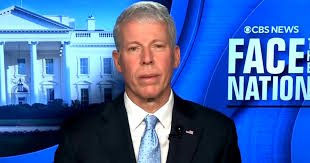
The High-Stakes Mission of Energy Secretary Chris Wright
In a recent high-profile interview on “Face the Nation with Margaret Brennan,” U.S. Secretary of Energy Chris Wright laid out a bold and uncompromising strategy regarding one of the most volatile geopolitical flashpoints in the world: Iran. From the dismantling of nuclear capabilities to the reopening of critical maritime trade routes, Wright’s vision is clear—the world cannot coexist with a nuclear-armed Iran.
Dismantling the Nuclear Threat
At the heart of the current U.S. administration’s policy is the absolute termination of Iran’s nuclear program. Secretary Chris Wright emphasized that the goal is not merely to slow down enrichment—as previous agreements attempted—but to eliminate it entirely.
The Department of Energy (DOE) is poised to play a central role in this operation. Wright highlighted several critical points regarding the nuclear material currently in Iran:
- n
- Enriched Uranium: Iran possesses nearly 1,000 pounds of uranium enriched to 60%, which is dangerously close to weapons-grade.
- DOE Expertise: The U.S. Department of Energy holds the primary technical expertise required to handle, transport, and secure this hazardous material.
- The Objective: Whether through the International Atomic Energy Agency (IAEA) or direct U.S. intervention, the enriched uranium must be removed from Iranian soil.
n
n
n
The Battle for the Strait of Hormuz: Project Freedom
Beyond the nuclear threat, the global economy remains vulnerable to the instability of the Strait of Hormuz. Secretary Wright discussed the complexities of “Project Freedom,” a military initiative designed to guide commercial vessels safely through the waterway despite Iranian harassment.
While Project Freedom was temporarily paused to allow for negotiated settlements, Wright warned that this is not a permanent retreat. The U.S. strategy employs a “carrot and stick” approach:
- Diplomatic Pressure: Offering Iran a path to reopen the strait through negotiation.
- Military Enforcement: If negotiations fail, the U.S. military will resume clearing the strait to ensure the free flow of global traffic.
n
n
Economic Warfare and “Operation Economic Fury”
To force Iran to the negotiating table, the U.S. is significantly increasing economic pressure. Secretary Chris Wright detailed the impact of the current blockade on Iranian export revenues and the launch of “Operation Economic Fury.”
This operation specifically targets the corrupt leaders of the Islamic Revolutionary Guard Corps (IRGC), aiming to seize assets and funds they have hidden abroad. By stripping the regime’s elite of their personal wealth, the administration hopes to create internal pressure for a deal.
Energy Markets: Short-Term Pain for Long-Term Gain
One of the most pressing concerns for the average citizen is the volatility of gas prices. When questioned about the potential for price spikes during this conflict, Wright remained pragmatic.
He acknowledged that while there may be short-term dislocations in energy markets, the alternative is far worse. A nuclear-armed Iran would pose a permanent, existential threat to the world’s most vital oil and gas producing regions, leading to far more catastrophic economic instability in the long run.
Conclusion: A New Era of Energy Diplomacy
Secretary Chris Wright’s approach marks a significant shift from the past. By defining the goals in “black and white” terms—the total end of the nuclear program and the guaranteed freedom of navigation—the U.S. is signaling a move away from complex, incremental deals toward a definitive resolution.



