
A Shift in Tradition: Russia’s Muted Victory Day Celebration
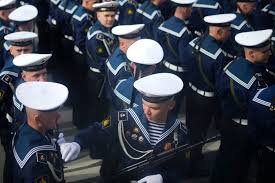
For decades, the Victory Day parade on Moscow’s Red Square has served as a dazzling showcase of Russian military might. However, this year, President Vladimir Putin presided over a remarkably different event. In a surprising departure from tradition, the parade was significantly scaled-down, marking the first time in nearly twenty years that no heavy military hardware was displayed on the streets of the capital.
The absence of tanks and missile launchers was not a coincidence but a strategic decision. Instead of a physical display of force, the Kremlin opted for high-production, pre-recorded videos broadcast on giant screens. These clips showcased Russia’s drone capabilities, air defense systems, long-range bombers, and nuclear-capable submarines, aiming to project power while minimizing physical risk.
The Context: Ceasefires and Security Concerns
The decision to curb the parade’s scale comes at a critical juncture. The event took place amidst a fragile three-day ceasefire between Russia and Ukraine, an agreement announced by US President Donald Trump. This brief window of diplomacy included a significant prisoner exchange, described by President Volodymyr Zelensky as a “1,000 for 1,000” swap.
Security concerns also played a pivotal role in the modified format. Following intensified Ukrainian strikes targeting oil refineries deep within Russian territory, the Kremlin prioritized safety over spectacle. To further secure the capital, Muscovites faced temporary restrictions on mobile internet and text messaging, highlighting the internal tensions currently gripping the city.
Linking the Past to the Present
As is common in his rhetoric, Vladimir Putin used the anniversary of the Soviet Union’s victory over Nazi Germany in World War II to frame the current conflict in Ukraine. By drawing a direct line between the “Great Patriotic War” and the ongoing “special military operation,” Putin sought to legitimize current military actions as a continuation of historic struggles.
- The Narrative: Putin claimed that the “victorious generation” inspires today’s soldiers in their fight against an “aggressive force” supported by NATO.
- Symbolism: In a poignant display of this connection, Putin was flanked by both a WWII veteran and a decorated soldier from the current conflict.
International Relations and Media Restrictions
The guest list for this year’s festivities reflected a shrinking circle of allies. While previous years saw a vast array of global leaders, this event featured a more limited group, including the leadership of Belarus, Malaysia, Kazakhstan, and Uzbekistan. Notably, Slovak Prime Minister Robert Fico attended bilateral meetings with Putin to urge dialogue but did not participate in the parade itself.
Furthermore, the event was shrouded in secrecy. Many international media outlets, including CNN, were barred from attending despite having accreditation. This forced the global press to rely almost exclusively on state-sanctioned footage, limiting independent perspectives on the event’s atmosphere.
Conclusion: A New Era of Russian Optics
The scaled-back nature of this Victory Day parade suggests a transition in how the Kremlin handles its public image. Between a slowing economy, increased internal censorship, and the pressures of a grinding war, the “dazzling display” has been replaced by a controlled, digital projection of power. For those monitoring global geopolitical trends, this shift offers a glimpse into the current challenges facing the Russian administration.



