
Defiance in Buenos Aires: Argentina’s Chief of Staff Manuel Adorni Refuses to Resign Amid Corruption Probe
The political atmosphere in Argentina has reached a boiling point. In a bold move that has sent ripples through the halls of power, Chief of Staff Manuel Adorni has officially declared that he will not step down from his position, despite an escalating investigation into allegations of illicit enrichment involving him and his wife.
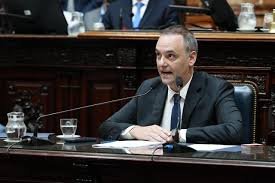
Speaking before Congress during his first national administration report, Adorni didn’t just defend his record—he leaned into the controversy. “Regarding the question of whether I will resign or continue as chief of staff, I want to make it clear [I am not stepping down]. On the contrary, I’m taking responsibility,” Adorni stated, emphasizing his pride in coordinating what he describes as the most reformist cabinet in Argentine history.
The Heart of the Scandal: Undeclared Assets and Luxury Travels
The controversy surrounding Adorni isn’t just about political friction; it’s about money and transparency. Since March, the Chief of Staff has been under intense scrutiny following reports that he purchased at least two properties over the last two years—assets that were conspicuously missing from his mandatory annual public official declarations.
Beyond the real estate, the judiciary is examining several expensive international trips taken by Adorni and his family. The investigation seeks to determine if these luxury expenditures align with his official government income. The scandal peaked when news broke that his wife, Bettina Angeletti, traveled on the presidential plane during an official delegation trip to New York.
Adorni’s defense has been straightforward: he claims these matters belong to his “private life” and are not related to government acts. He maintained that his wife’s travel was as a guest on a single leg of the trip, asserting, “I did not commit any crime, and I will prove it in court.”
President Milei’s Unwavering Support
In a move that surprised many political observers, President Javier Milei took a highly visible stance of support for his right-hand man. Milei’s presence at the session was unusual, signaling a powerful political endorsement.
- n
- A Unified Front: Before the session, Milei posed for a photo with his entire cabinet, including Adorni and Presidency Secretary Karina Milei.
- Political Backing: The presence of key figures like Martín Menem and Patricia Bullrich further underscored the administration’s refusal to let the scandal weaken its leadership.
- The Strategy: By standing with Adorni, Milei is signaling that the “reformist” agenda takes precedence over judicial accusations.
Economic Reforms vs. Political Noise
While the corruption probe dominated the headlines, Adorni attempted to pivot the conversation toward the government’s broader goals for Argentina. He spoke of leading the country toward a “destination of greatness,” consciously distancing the current administration from what he termed “tragic populism.”
Addressing the economy, Adorni admitted that the March inflation rate of 3.4% was “bad,” but he quickly shifted the blame to “Kirchnerism, prebendary companies, and some media outlets,” echoing the rhetoric frequently used by President Milei.
A “Show” or a Report? The Opposition Reacts
The session was far from harmonious. Opposition members, including Nicolás del Caño of the left-wing Frente de Izquierda, criticized the event as a carefully choreographed “show.” Del Caño argued that the government is ignoring the real social problems facing the Argentine people while pretending the illicit enrichment accusations don’t exist.
Furthermore, the administration’s transparency was questioned when it was revealed that deputies’ 2,151 written questions were answered in a massive 2,000-page document filed only hours before the session, leaving lawmakers with virtually no time to review the data.
As Argentina continues to navigate deep economic waters and political turmoil, the fate of Manuel Adorni remains a focal point of the battle between the Milei administration and its critics. For more context on the current economic landscape of the region, you can explore recent reports from Reuters Americas.



