
What Exactly is a ‘Cut-off Low’ (Goutte Froide)?
For many residents of Quebec, there is nothing more frustrating than a summer that feels like an extended autumn. While we usually expect warm breezes and sunshine, a specific meteorological phenomenon known as a cut-off low (or goutte froide in French) can completely flip the script.
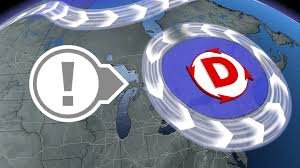
Under normal circumstances, weather systems move across the continent following the atmospheric circulation—essentially a high-altitude “highway” of strong winds that push perturbations from west to east. However, occasionally, a pocket of low pressure detaches from this main current, closing in on itself and becoming stagnant. This is what meteorologists call a cut-off low.
Why These Systems are So Disruptive
The primary danger of a cut-off low is its lack of mobility. Unlike standard storm systems that sweep through the province quickly, these isolated depressions aren’t subject to the usual west-to-east flow. This means they can park themselves over a region for an extended period.
- Duration: These systems typically linger for two to four days, but in extreme cases, they can remain stationary for six to ten days.
- Impact: If the system is fueled by high humidity, the resulting precipitation can be catastrophic. A stark example of this phenomenon’s power was seen in the extreme flooding in Spain in 2024, where massive rainfall led to devastating losses.
How Position Determines Quebec’s Weather
Depending on where the cut-off low settles, Quebecers will experience very different conditions. Meteorologist Réjean Ouimet highlights three primary scenarios:
- Directly Over Quebec: This is the worst-case scenario, leading to a prolonged sequence of gloomy, grey, and cool weather.
- South of the Great Lakes: In this instance, the system acts as a pump, drawing warm air northward, which actually clears the skies and raises the mercury.
- East of the Province: This position typically brings a persistent and unpleasant northeast wind, resulting in variable conditions and a noticeable chill.
Frequency and the ‘Spoiled Summer’ Effect
Cut-off lows are far more common during winter and spring. On average, Quebec sees about two of these events per season. During the summer, they occur roughly every other year. While a single event is manageable, a recurrence of these systems can define an entire season.
History shows that when these systems appear late in the spring, it can be an omen for the summer to come. For example, the summers of 2008 and 2009 are remembered as being “spoiled” because three separate cut-off lows hit the same sectors, keeping the province damp and cool for months.
To stay updated on current atmospheric trends and warnings, it is always recommended to monitor Environment Canada for the most accurate local forecasts.



