
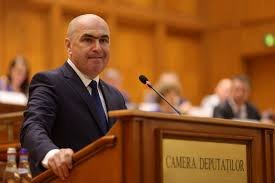
Political Crisis in Romania: Bolojan Government Falls as Power Struggle Intensifies
Romania has been plunged into a state of political uncertainty following a decisive blow in Parliament. In a landslide vote, the government led by Ilie Bolojan was dismissed through a motion of censure spearheaded by the PSD-AUR alliance. The motion was supported by 281 senators and deputies, marking one of the most significant parliamentary rejections in recent history.
This sudden shift in power echoes the volatility of 2021, matching the record-breaking vote that brought down the Cîțu government. Now, as Bolojan remains in an interim capacity, the eyes of the nation are on the Cotroceni Palace.
President Nicușor Dan Rules Out Early Elections
In a prompt press conference at the Cotroceni Palace, President Nicușor Dan addressed the nation to stabilize the political climate. He announced that formal consultations to form a new government will begin immediately, starting with informal discussions followed by official party delegations.
Crucially, the President explicitly excluded the possibility of early elections. His primary goals for the new administration are clear:
- n
- Combating Corruption: Addressing the deep-seated expectations of Romanian citizens.
- Ensuring State Functionality: Restoring efficiency to daily government operations.
- Pro-Western Alignment: Ensuring that the next government remains firmly committed to European Union values and Western alliances.
n
n
A Fragmented Political Landscape: Who Wants What?
The fall of the government has triggered a wave of internal conflicts and strategic repositioning among the major political players. The landscape is currently split between those seeking stability and those demanding a total break from past alliances.
The PSD Strategy
Sorin Grindeanu, leader of the PSD, has indicated that while they triggered the fall of the cabinet, they are open to maintaining a broad coalition. However, the PSD is firm on one point: they do not want a technocratic government and are pushing for a new premier who can lead a stable majority.
The PNL Dilemma: Responsibility vs. Pride
The PNL is currently a house divided. While some leaders, such as Cătălin Predoiu and Nicoleta Pauliuc, argue that the party must remain in power to ensure a “pro-European coalition,” others are calling for a strict adherence to previous resolutions that forbid collaboration with the PSD. Rareș Bogdan emphasized that PNL must act responsibly for the sake of Romania, suggesting that the devastating vote score should be a wake-up call for the party.
The USR Hardline
Under the leadership of Dominic Fritz, the USR has taken a more rigid stance. The party has reinforced its resolution to exclude any government majority that includes the PSD. Fritz warned that allowing the PSD-AUR alliance to dictate terms could “return Romania to the past,” hindering essential reforms and fueling nepotism.
Economic Concerns and the Road Ahead
Beyond the political theater, economists warn that this instability comes at a fragile time. Romania is currently undergoing a delicate budgetary correction process. A prolonged leadership vacuum could jeopardize macroeconomic stability and investor confidence.
As President Nicușor Dan begins his negotiations, the central question remains: Can these dysfunctional political forces find common ground, or is Romania entering a new cycle of chronic instability?
Stay tuned for more updates on the evolving political situation in Romania.



