
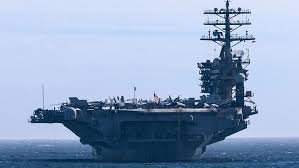
High-Stakes Confrontation: US Navy Defends the Strait of Hormuz
The world’s most critical maritime chokepoint has become a flashpoint for international tension once again. In a bold move to ensure the flow of global trade, U.S. forces have initiated “Project Freedom,” a strategic operation designed to reopen and secure the Strait of Hormuz against increasing Iranian aggression.
The situation reached a boiling point this week as two U.S. Navy destroyers, the USS Truxtun and the USS Mason, successfully transited the strait while under a sustained barrage of drones, missiles, and “fast boats” launched by Iranian forces. Despite the intensity of the attacks, the destroyers—supported by AH-64 Apache helicopters and advanced fighter aircraft—neutralized every threat, ensuring a safe passage for international shipping.
What is “Project Freedom”?
War Secretary Pete Hegseth has clarified that Project Freedom is a defensive, temporary, and focused mission. Unlike broader combat operations, its sole purpose is to prevent “international extortion” and protect innocent commercial vessels from being blocked or seized by Iran.
According to Hegseth, the U.S. has established a “red, white, and blue dome” over the strait, providing 24/7 surveillance and protection. Key goals of the operation include:
- n
- Ensuring Freedom of Navigation: Preventing Iran from unilaterally closing the international waterway.
- Protecting Commercial Trade: Safeguarding tankers and container ships from third-party attacks.
- Deterring Aggression: Sending a clear message that attacks on U.S. personnel or allied shipping will meet “overwhelming and devastating” firepower.
Regional Escalation and Diplomatic Efforts
The conflict isn’t limited to U.S. ships. The United Arab Emirates (UAE) recently activated its air defenses to intercept over a dozen Iranian missiles, highlighting the volatile nature of the region. While President Donald Trump has warned that Iran could be “blown off the face of the earth” if attacks persist, diplomatic channels remain open.
French President Emmanuel Macron has stepped in, calling for a total cessation of hostilities and the return to diplomatic negotiations. Simultaneously, Iranian Foreign Minister Abbas Araghchi is scheduled to visit China, where discussions on the Middle East conflict are expected to be a priority before a high-level summit between President Trump and Chinese President Xi Jinping.
The Economic Toll: Why This Matters to You
The instability in the Strait of Hormuz has a direct impact on the global economy. With a significant portion of the world’s oil passing through this narrow corridor, markets have reacted sharply. The AAA national average for gas prices has already surged to $4.483, reflecting the volatility caused by the threat of maritime closure.
A Broader Regional War
While the focus remains on the naval battle in the Strait, the regional conflict extends to Gaza. The Israel Defense Forces (IDF) recently announced the elimination of Hamas Nukhba commander Anas Muhammad Ibrahim Hamed in a precise airstrike, further illustrating the complex web of security threats facing the Middle East today.
As U.S. Central Command (CENTCOM) continues to monitor the situation, the world watches to see if Project Freedom will lead to a sustainable peace or trigger a larger regional escalation.



