
New Orleans: America’s Coastal Ground Zero in the Climate Crisis
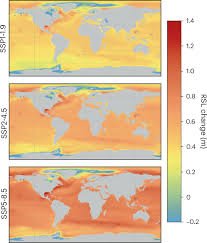
New Orleans has always been a city defined by its relationship with water. However, a recent study published in Nature Sustainability warns that this relationship is reaching a critical tipping point. As global temperatures threaten to surpass the 1.5°C threshold established by the Paris Agreement, the city and the surrounding Mississippi Delta are facing a future that transcends current urban planning.
The Geological Warning: Beyond the Horizon
The threat isn’t just about seasonal flooding or stronger hurricanes. Scientists are now looking at a “geological frame of reference,” noting that similar temperature increases in the past triggered massive ice-sheet collapses. If this pattern repeats, the resulting sea-level rise will far exceed any current defenses.
Why is New Orleans specifically at risk? The region is a perfect storm of vulnerability:
- n
- Low Elevation: Much of the city and the delta sit below sea level.
- Subsidence: The land is naturally sinking as sediment supply from the Mississippi River decreases.
- Accelerated Melting: Polar ice sheet retreat is contributing to a faster rise in global ocean levels.
n
n
n
Climate-Driven Depopulation: A New Reality
For the first time, researchers are highlighting a significant trend: out-migration. While the cultural heart of New Orleans remains strong, there is a growing movement of people leaving the most vulnerable coastal zones. This isn’t just a reaction to individual disasters like Hurricane Katrina, but a slow, systemic shift driven by the realization that some areas may become uninhabitable.
According to data from NOAA, the rate of sea-level rise has doubled in recent decades, making “managed retreat”—the strategic movement of people and infrastructure away from the coast—a necessary conversation for policymakers.
What the Next Few Decades Hold
The fate of the communities landward of the coastal zone will be decided in the next few decades. The challenge lies in balancing the preservation of a unique cultural heritage with the physical reality of a disappearing coastline. The study argues that understanding prehistoric human mobility patterns can help us plan a more sustainable and humane transition for the residents of Louisiana.
Conclusion: A Call for Strategic Adaptation
Addressing the vulnerability of New Orleans requires more than just taller levees; it requires a fundamental shift in how we view coastal living. By integrating scientific data with social planning, there is hope to mitigate the crisis and ensure that the legacy of the Mississippi Delta survives, even as the map changes.
For more information on global climate projections, visit the IPCC (Intergovernmental Panel on Climate Change).



