
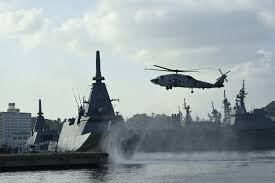
Australia’s Naval Evolution: The Strategic Leap with Japan’s Mogami-Class Frigates
In a decisive move to safeguard its maritime interests and modernize its naval capabilities, Australia has embarked on an ambitious journey to revitalize its fleet. Under the strategic umbrella of Project Sea 3000, the Royal Australian Navy (RAN) is transitioning toward a high-tech future, ensuring that its surface combatant fleet remains a formidable force in the Indo-Pacific region.
A Historic Partnership: Australia and Japan
The cornerstone of this modernization is a landmark agreement between Australia and Japan. In a ceremony held aboard the JS Kumano in Melbourne, defence ministers from both nations signed a contract to acquire three upgraded Mogami-class frigates. This deal is not merely a purchase; it is Japan’s largest-ever defence export and a powerful symbol of the growing strategic alignment between the two allies.
The production plan is split to maximize both immediate delivery and domestic industrial growth:
- n
- Initial Phase: Three 4,800-ton frigates will be constructed by Mitsubishi Heavy Industries (MHI) in Japan, with the first expected delivery by December 2029.
- Expansion Phase: An additional eight frigates will be built locally in Western Australia, boosting the domestic shipbuilding industry.
This massive investment is estimated to reach A$20 billion (approximately US$14.4 billion) over the next decade, reflecting the critical urgency of this naval upgrade.
A Technological Quantum Leap
For the Royal Australian Navy, the Mogami-class is more than just a replacement for the aging Anzac-class; it is a “game-changer.” According to Rear Admiral Stephen Hughes, the RAN’s Head of Naval Capability, these vessels allow the navy to jump an entire generation in technology.
Cutting-Edge Specs and Armaments
The upgraded Mogami frigates are designed for high automation and extreme efficiency, aiming for 300 days of availability at sea annually. Their arsenal includes:
- n
- Surface-to-Air Defence: ESSM Block 2 missiles housed in a 32-cell Mk 41 vertical-launch system.
- Offensive Power: Deck-mounted Naval Strike Missiles.
- Sub-surface Combat: MK 54 lightweight torpedoes.
- Close-in Defence: SeaRAM systems for immediate threats.
- Advanced Sensors: The innovative UNICORN integrated mast and state-of-the-art Japanese sonar systems.
Strategic Transition: Quality Over Quantity
While some critics have pointed to the decline in the total number of ships, the RAN emphasizes that the focus has shifted from quantity to capability. The transition from the Anzac-class to the Mogami-class represents a shift toward a more versatile, automated, and lethal force. By keeping the ships as close to the original Japanese design as possible, Australia aims to avoid costly delays and ensure a rapid deployment of these assets.
Ultimately, this collaboration will result in a combined fleet of 35 Mogami frigates operating between Australia and Japan, creating a formidable maritime shield in the region.
For more information on international maritime security and naval trends, you can visit the official Australian Department of Defence website.



