
UK Protests Under Scrutiny: Is the United Kingdom Facing a Ban on Certain Marches?
The balance between the fundamental right to peaceful assembly and the necessity of public safety has become a flashpoint in the United Kingdom. Recent events have pushed the British government to reconsider its approach to public order, with Prime Minister Sir Keir Starmer suggesting that some protests may need to be banned entirely.
The Catalyst: Rising Tensions and Violence
The conversation around stricter regulations follows a disturbing surge in antisemitic incidents across the country. A pivotal moment occurred in Golders Green, North London, where two Jewish men were stabbed in what police have officially declared a terror incident. This attack is part of a broader, worrying trend of violence targeting the Jewish community, leading many to feel increasingly unsafe in their own neighbourhoods.
In response, figures such as Chief Rabbi Sir Ephraim Mirvis and terrorism legislation reviewer Jonathan Hall KC have called for a “moratorium” on pro-Palestinian marches. They argue that the repeated nature of these demonstrations has created a toxic environment that effectively incubates antisemitism.
Sir Keir Starmer’s Stance: The “Cumulative Effect”
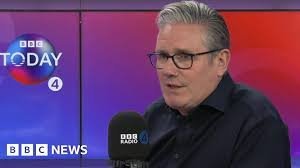
During an interview with BBC Radio 4, Prime Minister Sir Keir Starmer addressed the possibility of tougher policing and outright bans. While he emphasized his commitment to defending the right to protest and freedom of speech, he raised concerns about the cumulative effect of repeated marches.
“I think certainly [tougher policing is needed], and I think there are instances for the latter [banning protests],” Starmer stated, highlighting that the frequency of these events has a profound psychological and safety impact on the Jewish community.
Starmer specifically pointed to dangerous chants, such as “globalise the intifada,” asserting that such language is harmful and should be prosecuted to prevent the incitement of violence.
A Divided Political Landscape
The prospect of banning protests has sparked a fierce debate across the political spectrum in the United Kingdom:
- The Conservative Party & Reform UK: Leaders like Kemi Badenoch and Zia Yusuf have called for immediate bans, arguing that marches are being used as a cover for intimidation and that previous governments were too lenient.
- The Liberal Democrats: They suggest a middle ground, where protests proceed only if they are deemed “safe” and are not hijacked by those inciting hatred.
- The Green Party & Your Party: Critics like Zack Polanski have accused the government of using fear to justify “authoritarian restrictions” on civil liberties, warning that such moves could further divide society.
The Legal Framework of Public Order in the UK
Currently, police in England and Wales possess the authority to restrict protest routes or end demonstrations to prevent serious public disorder. However, a total ban requires the approval of the Home Secretary—a power that is rarely exercised. A notable exception occurred in March, when the government banned London’s Al Quds Day march, marking the first such ban since 2012.
For more information on the legal standards for public assembly, you can visit the official UK Home Office website.
Conclusion: Security vs. Liberty
As the United Kingdom grapples with these challenges, the government faces the delicate task of protecting marginalized communities from hate crimes without eroding the democratic right to dissent. Whether new legislation or stricter enforcement of existing laws will be the answer, the outcome will significantly shape the future of civil liberties in Britain.



