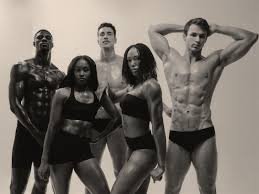
Beyond the Limit: Inside the Controversial ‘Steroid Olympics’
Imagine waking up in a five-star resort in Abu Dhabi, not to the sound of an alarm, but to the sirens of missile interceptions. For athletes like Ben Proud, a British Olympian, this high-tension atmosphere is the backdrop for a radical experiment in human performance. Welcome to the Enhanced Games, a sporting spectacle that is turning the traditional Olympic philosophy on its head.
While the world has long viewed performance-enhancing drugs (PEDs) as the ultimate taboo, the Enhanced Games—backed by the influential ‘Thiel-verse’ and venture capitalists—embraces them. This isn’t just a competition; it’s a calculated leap into the future of biohacking, echoing the curiosity seen in the Abby Labar trend and other modern movements focused on optimizing the human form.
The Price of Superhumanity: Risk vs. Reward
For many participants, the decision to join the Enhanced Games is a pragmatic financial calculation. In a world where most Olympic athletes struggle to make a living, the incentives here are staggering:
- n
- World Record Bonuses: Up to $1 million for breaking a record.
- Race Wins: Payouts of $250,000.
- Base Salaries: Mid-to-high six figures for a 12-week training camp.
Athletes like Kristian Gkolomeev and Shania Collins argue that the lack of transparency in traditional sports makes this ‘open’ approach to enhancement more honest. They aren’t just chasing medals; they are testing the absolute limits of human biology under medical supervision.
The Biohacking Economy and the Peptide Revolution
The Enhanced Games is more than a rogue tournament; it is a node in a rapidly expanding biohacking economy. The vision, driven by cofounders like Aron D’Souza and Christian Angermayer, is to transform athletics into a live testing ground for biotechnology—much like Formula 1 is for the automotive industry.
Central to this is the use of peptides and metabolic modulators. There is currently a significant political push, including efforts by figures like Robert F. Kennedy Jr., to deregulate certain peptides in the US. This could transition these substances from the ‘black market’ into legitimate domestic channels, potentially fueling a new era of “looksmaxxing” and longevity science.
“The Enhanced Games is just the demonstration—the implementation—of what the extremely wealthy have already done to their own bodies,” suggests the intersection of tech wealth and biological modification.
The Ethical Divide: Science or Carnival?
Not everyone is convinced. Medical professionals and organizations like the World Anti-Doping Agency (WADA) warn that these “n-of-one” experiments are dangerous. The risks—ranging from infertility and organ stress to the potential acceleration of cancerous cells—are often overshadowed by the immediate allure of muscle growth and speed.
While the International Olympic Committee (IOC) continues to uphold the ideal of “clean sport,” the Enhanced Games bets on a different future: one where the athlete is a prototype and the result is a TikTok-ready spectacle of superhuman strength.
What’s Next for the Enhanced Games?
As the competition moves toward Las Vegas, the world will watch to see if this model of “supervised enhancement” can coexist with traditional sports or if it will completely disrupt them. Whether it’s through gene therapy or pharmacological cocktails, the line between athlete and experiment is blurring.
For the participants, the goal is simple: to find out what they are truly capable of when the rules are removed and the rewards are limitless.