George Orwell’s Animal Farm: Why the New Movie Adaptation is Sparking a Political Firestorm
For many of us, George Orwell’s Animal Farm was a staple of middle school literature. We remember the harrowing tale of barnyard animals who, driven by a dream of equality, overthrow their human oppressors only to fall into a new, more terrifying form of tyranny. It is a timeless cautionary tale about how the hunger for power inevitably erodes morality.
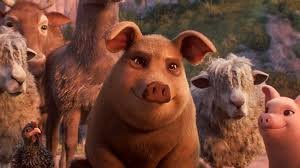
Fast forward to today, and the story remains as relevant as ever. However, the recent release of a new animated adaptation, directed by Lord of the Rings star Andy Serkis, has revealed something startling: we may have forgotten how to read political satire.
A Clash of Ideologies: The Battle Over the Message
The film, distributed by Angel Studios, has become a flashpoint for political debate, particularly among right-wing influencers. The controversy began when figures like Riley Gaines praised the film as a perfect reminder that “Marxism always has and always will fail.”
However, this interpretation has sparked a civil war within conservative circles. Other commentators, such as podcaster Tim Pool and influencer Peachy Keenan, have condemned the film as “socialist propaganda,” claiming it is anti-capitalist.
Why the confusion? Because Animal Farm isn’t a simple handbook for one political side. While it is a searing critique of Stalinism, it also mocks the greed and exploitation found in capitalist structures. Orwell’s true target wasn’t a specific economic system, but rather the universal human lust for power and the danger of blind adherence to ideology.
Power, Corruption, and the Serkis Twist
In this latest adaptation, Serkis adds a new layer to the plot by introducing a greedy human character (voiced by Glenn Close) who attempts to buy the farm. This addition underscores the film’s central theme: authoritarianism and the corruption of power.
Despite this clear thematic direction, the film has struggled to find a cohesive audience, currently holding a mixed reception on Rotten Tomatoes. This suggests that the friction isn’t just about politics, but perhaps about the artistic execution—including some questionable comedic choices, such as Seth Rogen’s fart jokes in a political tragedy.
The Crisis of Media Literacy
The inability of high-profile political commentators to agree on the meaning of Animal Farm points to a deeper issue in our current information landscape: a decline in media literacy.
- n
- Binary Thinking: There is a growing inability to accept ambiguity or contradiction in art.
- Confirmation Bias: Viewers often project their own political leanings onto a story rather than analyzing the author’s intent.
- Oversimplification: Complex critiques are reduced to “pro-communism” or “anti-capitalism” soundbites.
n
n
n
George Orwell, a writer who spent his life fighting against the distortion of truth and language (as seen in his other masterpiece, 1984), would likely find this confusion fascinating—even if he would have been baffled by the addition of modern slapstick humor.
Final Thoughts: The Lesson Still Stands
Whether you view the new movie as a masterpiece or a misfire, the core lesson of Animal Farm remains essential. It warns us that regardless of the ideology promised, power tends to concentrate, and those who claim to be “equals” often end up walking on two legs, just like the humans they replaced.