
May Day 2026: The Surge of ‘May Day Strong’ and the Fight for Labour Justice
As May Day 2026 approaches, a wave of unprecedented mobilization is sweeping across the country. Thousands of citizens, students, and workers are preparing to join the “May Day Strong” demonstrations, a coordinated effort designed to disrupt the status quo and demand a society that prioritizes human dignity over corporate profit.
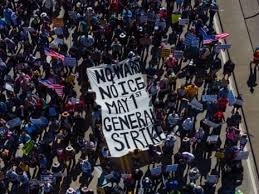
With over 3,500 events planned, the movement is calling for a total economic blackout. The mantra is clear: “no school, no work, no shopping.” From massive walkouts and street marches to community block parties, the goal is to demonstrate the collective power of the working class.
What is the “May Day Strong” Movement?
May Day has historically been the cornerstone of the International Workers’ Day protests. However, May Day 2026 represents a convergence of multiple social struggles. The “May Day Strong” coalition isn’t just about wages; it is a multifaceted fight for justice.
The coalition brings together a diverse array of allies, including:
- n
- Labour Unions: Fighting for fair contracts and safer working conditions.
- Immigrant Rights Groups: Demanding an end to ICE raids and advocating for pathway to citizenship.
- Political Organizations: Including the Democratic Socialists of America.
- Student Activists: Organizing walkouts to link economic struggle with educational funding.
n
n
n
n
From Classrooms to City Streets: Local Impact
The scale of the May Day 2026 actions is significantly larger than in previous years. Organizers report that the number of events has more than doubled, signaling a growing appetite for systemic change.
In North Carolina, at least 15 school districts have granted teachers the day off to participate in the “Kids Over Corporations” rally, emphasizing that public education funding is a labour issue. Meanwhile, in Chicago, the Chicago Teachers Union successfully advocated for May Day to be recognized as a “day of civic action,” highlighting the intersection between the affordability crisis and the marginalization of public institutions.
At Purdue University, students are leading the charge. Sanshray Kukutla, a Sunrise Movement organizer, puts it bluntly: “It’s our labour, our spending, and our participation that keeps the whole system running. If we don’t work, they don’t have profits.”
The Long Game: Building Toward a General Strike
While the economic blackout of May Day 2026 is a powerful statement, it is also a “structure test.” According to Leah Greenberg of Indivisible, these actions are designed to build the “muscles of non-cooperation” necessary for larger movements.
The ultimate ambition for many is a general strike. Although the 1946 Taft-Hartley Act made such strikes legally precarious in the US, labour leaders are finding strategic workarounds. Shawn Fain, president of the United Auto Workers (UAW), has suggested a long-term strategy to align union contract expirations to facilitate a coordinated general strike by May 1, 2028.
Conclusion: Why May Day 2026 Matters
The events surrounding May Day 2026 are more than just protests; they are a reminder that the economy exists because of the people who power it. By choosing to stop working and shopping for a day, the “May Day Strong” movement aims to shift the balance of power from the billionaire class back to the workers.



