
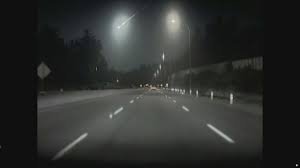
Stunning Meteor Lights Up Vancouver Island Skies: A Celestial Spectacle
Residents across Vancouver Island were treated to a breathtaking celestial display recently as a brilliant meteor streaked across the night sky. The event, described by many as a “fireball,” left onlookers in awe and quickly trended across social media as people scrambled to share their sightings of the glowing streak.
What Exactly Happened Over Vancouver Island?
Witnesses reported a sudden, intense flash of light that illuminated the horizon, momentarily turning night into day. These types of events occur when a piece of space debris—known as a meteoroid—enters Earth’s atmosphere at high speeds. The friction between the object and the air creates intense heat, ionizing the surrounding gas and creating the luminous trail we see from the ground.
While most meteors burn up completely before reaching the surface, the sheer brightness of this Vancouver Island meteor suggests it was a larger-than-average fragment, potentially a remnant of an asteroid or a comet.
The Science: What is a Fireball?
In astronomical terms, not every shooting star is created equal. When a meteor is exceptionally bright—specifically, brighter than the planet Venus—it is classified as a fireball.
- n
- Composition: Most fireballs are composed of rock or iron.
- Velocity: They enter the atmosphere at speeds ranging from 11 to 72 kilometers per second.
- Atmospheric Entry: The glow is caused by “ram pressure,” where the air in front of the meteor is compressed and heated.
For more detailed information on how these space rocks behave, you can explore the comprehensive archives at NASA, the world leader in space exploration.
How to Report a Meteor Sighting in Canada
If you were lucky enough to witness the meteor over Vancouver Island, your observation could be scientifically valuable. Astronomers and geologists use crowdsourced data to triangulate the trajectory of the object and determine if any fragments (meteorites) actually hit the ground.
To contribute to the research, you can check resources provided by Natural Resources Canada or international meteor reporting networks. Providing the exact time, location, and direction of the light helps experts map the event with precision.
Final Thoughts on the BC Sky
Whether you are a seasoned stargazer or someone who just happened to look up at the right moment, events like the Vancouver Island fireball remind us of the dynamic nature of our universe. Keep your eyes on the skies—you never know when the next cosmic visitor will make an appearance over British Columbia!



