
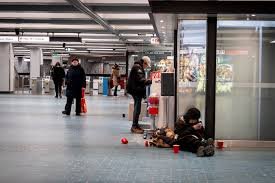
STM Metro Security: Why the Loitering Ban has been Extended Until 2027
Navigating the STM metro has become a point of contention in Montreal. In a move to prioritize passenger safety and operational efficiency, the Société de transport de Montréal (STM) has announced that the ban on loitering within the metro network will remain in effect until at least April 30, 2027.
The “obligation to circulate” policy, which prevents individuals from staying in stations without moving toward an exit or a train, was initially introduced as a temporary measure in March 2025. However, due to the escalating homelessness crisis, the measure has been renewed multiple times.
The STM Perspective: Does the Ban Work?
According to Aref Salem, Chairman of the STM Board, the primary goal is to improve the sentiment of security among the commuting public. The STM argues that the data supports the continuation of this policy. Key results reported by the transport authority include:
- n
- Reduced Disruptions: Between November 2025 and March 2026, service interruptions of five minutes or more caused by intentional mischief dropped by 22%.
- Fewer Late-Night Removals: There was a 36% decrease in the number of people needing to be escorted out of the system at closing time.
- Staff Safety: After a 6% spike in assaults against employees in 2024, the STM reports that the situation has finally stabilized.
Special constables are now empowered to ask individuals to leave the network without having to witness a specific crime, streamlining the process of keeping platforms and corridors clear.
The Human Cost: A Crisis Pushed Underground
While the STM sees operational success, community organizations describe the policy as a failure of compassion. Outreach workers argue that pushing homeless individuals out of the metro without providing viable housing alternatives only worsens their psychological distress.
“Every week, hundreds of people are expelled from the metro without us being able to offer them a real alternative. We push them from one place to another, but we never answer the fundamental question: where are they supposed to go?”
— Annie Savage, Director and Spokesperson for RAPSIM
The impact is felt most acutely during the harsh Canadian winters. Andrew Marrocco, Director General of Mission St-Michael, noted that his shelter has faced record-breaking demand, sometimes hosting 180 people in a single day—far exceeding its 60-place capacity—because there is no “winter tolerance” within the STM metro system.
Public Perception and Additional Security Measures
Despite the ban, public confidence in the network remains fragile. Only 52% of users currently report feeling safe in the metro and buses, a significant drop from 62% just two years ago. To combat this, the STM has implemented several additional strategies:
- n
- Controlled Access: Closing specific station entrances to manage drug use and incivilities.
- Direct Reporting: A new SMS service allowing passengers to report incidents in real-time.
- Increased Surveillance: Higher staff presence in “hot spot” stations.
- Staff Support: Following CNESST guidelines, the STM has reorganized teams so that maintenance and station agents no longer intervene alone in high-risk areas.
Conclusion: A Complex Balance
The city administration, led by Mayor Soraya Martinez Ferrada, maintains that it is working alongside the SPVM and community groups to move people off the streets and into permanent resources. However, as the STM metro loitering ban extends into 2027, the tension between transit security and human rights continues to be a defining challenge for Montreal’s urban landscape.



