
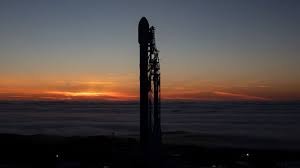
SpaceX Boosts Global Internet: Successful Starlink Launch from Vandenberg
The race to provide high-speed internet to every corner of the globe just took another giant leap forward. In a seamless display of aerospace precision, SpaceX successfully executed the Starlink 17-36 mission, launching from the iconic Vandenberg Space Force Base in California.
This mission marks a significant milestone in the expansion of the Starlink constellation, adding 24 state-of-the-art broadband internet satellites to the low Earth orbit (LEO) network. For those following the trend of the SpaceX Starlink Vandenberg launch, this represents the 42nd mission of its kind this year, showcasing the company’s unprecedented launch cadence.
Mission Breakdown: The Power of Falcon 9
The mission took flight from Space Launch Complex 4 East (SLC-4E) at precisely 7:42:49 pm PDT. The vehicle of choice was the reliable Falcon 9 rocket, specifically utilizing booster B1093. This particular booster is a veteran of the skies, marking its 13th successful flight after serving various missions, including Transporter-16 and several Space Development Agency projects.
Following a precise south-southwesterly trajectory, the rocket delivered its payload perfectly. But the excitement didn’t end with the deployment of the satellites.
A Masterclass in Reusability: The Landing
One of the most exhilarating aspects of SpaceX missions is the return of the booster. Approximately eight minutes after liftoff, B1093 performed a controlled descent and touched down flawlessly on the drone ship ‘Of Course I Still Love You’ in the Pacific Ocean.
- n
- Drone Ship Milestone: This marked the 194th landing on this specific vessel.
- Company Record: This event brought SpaceX’s total booster landings to an impressive 606.
Looking Beyond: NASA Collaboration and the Red Planet
While the Starlink expansion is a current priority, SpaceX continues to deepen its strategic partnership with NASA. Industry insiders suggest that the expertise provided by seasoned NASA engineers is critical in refining the goal of a commercial landing on Mars.
Furthermore, NASA has signaled its approval for astronauts to utilize reused Crew Dragon spaceships and Falcon 9 boosters for future missions to the International Space Station (ISS). This shift towards total reusability is not only cost-effective but essential for the sustainability of long-term space exploration.
Why This Matters for the Future of Technology
Every SpaceX Starlink Vandenberg launch brings us closer to a world where dead zones no longer exist. By leveraging a massive constellation of LEO satellites, SpaceX is bridging the digital divide, providing critical connectivity to remote areas, and paving the way for a more connected humanity. For more details on the current fleet and coverage, you can visit the official SpaceX website.



