
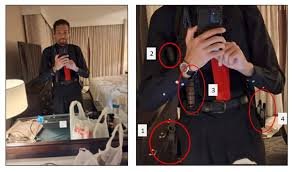
A Chilling Timeline: The Attempted Assassination at the White House Correspondents’ Dinner
Federal prosecutors have unveiled a disturbing look into the government’s case against Cole Tomas Allen, the suspected gunman who allegedly breached security at the White House Correspondents’ Association Dinner. The event, attended by President Donald Trump and top Cabinet officials, nearly turned into a national tragedy due to what prosecutors describe as a plot of “extreme political violence.”
Recent court filings from the Department of Justice provide a granular look at the timeline of the attack and the alarming arsenal Allen had amassed before his arrest.
The Planning: A Calculated Journey to DC
The investigation reveals that Allen, a 31-year-old from California, didn’t act on a whim. His preparations began weeks in advance. On April 6, shortly after the President confirmed his attendance, Allen began researching the event, the schedule, and the guest list.
To ensure he was perfectly positioned for the attack, Allen focused his search on finding a hotel near me—specifically targeting the Washington Hilton, the very venue hosting the dinner. By booking a room at the Hilton, he eliminated the risk of travel delays and placed himself inside the perimeter of the event.
The journey was as follows:
- n
- April 21: Departed Los Angeles via Amtrak to Chicago.
- April 23: Boarded a second train from Chicago to Washington, DC.
- April 24: Arrived at Union Station and checked into the Washington Hilton at 3:15 p.m.
The Moment of Attack: Weapons and Violence
The prosecution describes Allen’s arsenal as a “veritable armament,” which included a 12-gauge pump-action shotgun, a .38 caliber pistol, and various knives and daggers. On the night of the event, Allen meticulously tracked the President’s arrival via live media streams.
At approximately 8:30 p.m., after sending a pre-scheduled email to family and friends outlining his intentions, Allen approached the security checkpoint. In a brazen move, he shed his long black coat to reveal the shotgun and sprinted toward the ballroom.
According to a Department of Justice filing, a Secret Service officer reported that Allen fired the shotgun toward the stairs leading to the ballroom. The officer returned fire five times, and although none of the shots hit Allen, he fell to the ground and was immediately apprehended.
Legal Battle: Speculation vs. Evidence
The case is now unfolding in court, with a sharp divide between the prosecution and the defense:
- The Prosecution: Argues that Allen is too dangerous to be released, citing his extensive preparation and the potentially catastrophic consequences of his actions.
- The Defense: Allen’s lawyers claim the government’s narrative is built on “speculation.” They have challenged the ballistic evidence and raised concerns about Allen’s rights, claiming he was denied essential legal visits while held at the D.C. Jail.
While the judge has since granted “unrestricted legal visits,” the case remains a stark reminder of the vulnerability of high-profile events and the rising threat of targeted political violence in the US.
Stay tuned for more updates on this developing story as more ballistic evidence is analyzed by federal investigators.



