Kliff Kingsbury and the Commanders: Is the Air Raid Offense Facing a Reckoning?
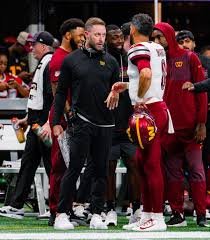
ASHBURN, Va. — Kliff Kingsbury has always been a man of unwavering conviction when it comes to his offensive philosophies. From his formative years as a Texas Tech quarterback under the legendary Mike Leach to his head-coaching tenures at his alma mater and in the NFL, and now as the offensive coordinator for the Washington Commanders, Kingsbury has been an ardent proponent of the “Air Raid” scheme. This philosophy, characterized by spread formations, relentless tempo, and creating vast space for quick decisions, empowers the quarterback to orchestrate the attack.
The Unconventional Approach of Kliff Kingsbury
In what marks his second season leading the Washington Commanders’ offense, Kliff Kingsbury’s system continues to stand out as one of the league’s most extreme outliers in terms of both tempo and structural design. This maverick approach captivated fans and analysts alike during last season’s surprising NFC Championship run, where the offense appeared unstoppable.
However, the follow-up campaign has seen a dramatic shift in fortunes. As the Commanders’ season culminates in Philadelphia for the second consecutive year, the magic that defined their previous run has long since evaporated, replaced by an agonizing eight-game losing streak. The stark contrast raises critical questions about the long-term viability and sustainability of such a distinctive offensive scheme in the NFL.
Questions of Sustainability and Coaching Future
Until recently, discussions surrounding a potential coordinator change for the Commanders primarily revolved around Kliff Kingsbury possibly departing for another opportunity. With vacancies at the New York Giants and Tennessee Titans – both featuring young quarterbacks ideal for Kingsbury’s developmental prowess – and more openings anticipated, his name was expected to be a prominent feature on coaching candidate lists.
Yet, a pattern of declining offensive production at his previous stops, including Arizona, has long fueled skepticism about Kingsbury’s distinctive approach. No other team, either this season or during the six years Kliff Kingsbury has directed an NFL offense, has come close to matching his extensive no-huddle usage. This singular commitment to tempo, especially in the wake of the Commanders’ struggles and with key players like quarterback Jayden Daniels sidelined due to injuries, has led to a crucial inquiry: Has confidence in the Air Raid’s long-term effectiveness begun to waver internally?
Inside the Commanders’ Evaluation
Injuries have undeniably disrupted plans on both sides of the ball, but Kliff Kingsbury’s name still surfaces on generic head-coaching candidate lists, albeit without the same “mojo” that accompanied him a year ago. Before any public reports surfaced, I sought clarity from both Kliff Kingsbury and head coach Dan Quinn regarding their belief in the scheme moving forward.
“I’ve seen it done at a high level,” Kingsbury stated confidently last Thursday. “Whether it’s Arizona or here at a very high level, and won games and had a lot of yards, a lot of success in that regard. I think I’m pretty confident in that style of play.”
Head coach Dan Quinn addressed the same question after practice the following day. That evening, an anonymous high-ranking front-office source from another organization hinted at the possibility of Kingsbury not returning, irrespective of whether he secures another job. The plot thickened further when The Athletic reported Saturday morning on internal conversations within Washington about potentially moving on from Kliff Kingsbury, even without a head-coaching offer, citing a possible disconnect with general manager Adam Peters. Another source familiar with the team’s internal dynamics aptly described the unfolding situation as “intriguing theater.”
A Pivotal Moment for Washington
The timing of these developments is paramount. Holding a dismal 4-12 record, the Washington Commanders are closing their season, setting the stage for an intense evaluation period. General Manager Adam Peters and Head Coach Dan Quinn, expected to hold a joint media availability, will meticulously review every aspect of the organization. This comprehensive assessment now undeniably includes the offensive identity, a facet that, just a year ago, seemed beyond reproach.
Twelve months prior, Kingsbury’s confidence appeared fully justified. With a rookie quarterback (Sam Howell, in the hypothetical context where Kingsbury’s “second season” implied a strong previous year for a rookie) playing efficient, fearless football, Washington’s dynamic offense propelled them to their best season since their 1991 Super Bowl run. Losing to the eventual Super Bowl champion Eagles on the road was tough, but expectations soared, and so did Kingsbury’s reputation.
Now, much has changed, leading to an uncomfortable, overarching question for the organization: If this offensive approach is truly so advantageous, why have none of the other 31 NFL teams come close to replicating its extreme characteristics? The answer, it seems, lies embedded in the raw numbers, the personnel decisions made, and a burgeoning uncertainty about the Air Raid’s long-term sustainability at the highest level of professional football. The future of Kliff Kingsbury and the Commanders’ offense hangs in the balance.