
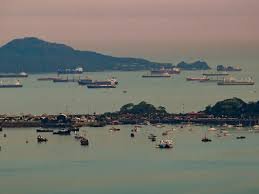
The Panama Canal Crisis: China, the US, and the Battle for Maritime Sovereignty
The strategic waters of the Panama Canal have become the latest flashpoint in a high-stakes geopolitical tug-of-war. What started as a legal dispute over port management has spiraled into a full-blown international crisis, with global shipping caught in the crossfire between China and the West.
The Legal Spark: A Supreme Court Shake-up
The tension ignited in late January when Panama’s Supreme Court delivered a landmark ruling. The court annulled decades-old contracts that allowed a subsidiary of the Hong Kong-based conglomerate CK Hutchison to manage the critical Balboa and Cristobal port terminals. The court deemed these agreements unconstitutional, effectively stripping the Chinese-linked firm of its operational control.
In response, CK Hutchison has not gone quietly, initiating international arbitration against the Panamanian government, seeking over $2 billion in damages.
China’s Retaliation: Ships as Political Pawns
The fallout from the court’s decision was immediate and severe. According to the US Federal Maritime Commission, China has retaliated through “targeted economic pressure,” detaining nearly 70 Panamanian-flagged ships in March alone. This surge in detentions far exceeds historical norms and is viewed by many as a punitive measure.
Laura DiBella, head of the US Federal Maritime Commission, noted that these intensified inspections appear to be informal directives intended to punish Panama for the transfer of port assets. Because a significant portion of US containerized trade relies on Panamanian-flagged vessels, this move has strategic implications reaching far beyond the borders of Central America.
A Global Coalition Emerges
The international community has reacted swiftly. A joint statement issued by the United States, Bolivia, Costa Rica, Guyana, Paraguay, and Trinidad and Tobago condemned China’s actions as a blatant attempt to politicize maritime trade and infringe upon national sovereignty.
- n
- US Support: Secretary of State Marco Rubio expressed deep concern, stating that any attempt to undermine Panama’s sovereignty is a threat to the entire hemisphere.
- Corporate Fallout: Shipping giants Maersk and MSC, who stepped in to manage the terminals after CK Hutchison, have reportedly been summoned by China’s Ministry of Transport for “high-level discussions.”
- Operational Halts: The Chinese shipping giant COSCO has already suspended its operations at the Balboa terminal.
The ‘Trump Factor’ and the Future of the Canal
Adding fuel to the fire is the political climate in the United States. During his 2025 inaugural address, President Donald Trump highlighted the Panama Canal as a priority for his administration, alleging that China was effectively “operating” the waterway and pledging that the US would “take back” control of the strategic route.
This intersection of Panamanian law, Chinese economic might, and US political ambition suggests that the canal is no longer just a shortcut for trade, but a trophy in a global power struggle.
Conclusion: The New Era of Maritime Vulnerability
As David Smith, an associate professor at the University of Sydney’s US Studies Centre, points out, we can no longer take for granted that container ships sail freely. From the Red Sea to the Strait of Hormuz and now the Panama Canal, shipping has become a primary target for political leverage.
For global businesses and policymakers, the message is clear: maritime lanes are now pawns in international politics, and the ripple effects of these disputes will be felt in supply chains worldwide.
To learn more about international maritime regulations, visit the International Maritime Organization (IMO) or explore trade dispute frameworks at the World Trade Organization (WTO).



