
Russian Superyacht Navigates the Strait of Hormuz: A Bold Move Amidst Global Tensions
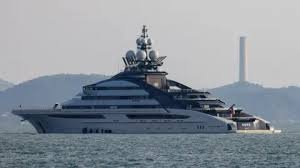
In a daring maritime maneuver that has caught the attention of global intelligence and shipping monitors, a massive Russian superyacht has successfully traversed the Strait of Hormuz. This crossing occurs at a time of extreme volatility, where the critical shipping channel is plagued by blockades and escalating geopolitical friction between the United States and Iran.
The Vessel of Luxury: Inside the ‘Nord’
The ship in question, the Nord, is not just any vessel. Measuring 142 meters (465 feet) in length and estimated to be worth over $500 million, it is a floating palace. According to profiles by Superyacht Times, the vessel is equipped with an array of opulence, including:
- n
- A private swimming pool
- An onboard submarine for deep-sea exploration
- A dedicated helipad for rapid transit
While the yacht is not formally registered to Alexey Mordashov—the richest Russian national according to Forbes—records indicate it was registered to a firm owned by his wife in 2022. Mordashov, a key ally of President Vladimir Putin and chairman of Severstal, has been under heavy sanctions from the US, UK, and EU since the 2022 invasion of Ukraine.
Defying the Blockade: Geopolitical Implications
The Nord‘s journey from Dubai to Muscat, Oman, is more than just a luxury trip; it is a political statement. Most private vessels have avoided the Strait of Hormuz due to the ongoing standoff between Tehran and Washington. However, the Nord managed to clear the waterway with apparent ease.
This incident coincides with a deepening strategic partnership between Russia and Iran. This week, President Vladimir Putin hosted an Iranian delegation in St. Petersburg, where Iranian Foreign Minister Abbas Araghchi praised the “depth and strength” of their alliance. Putin commended the Iranian people for “courageously fighting” for their sovereignty against Western pressure.
Economic Fallout and Global Oil Markets
The tension surrounding the Strait of Hormuz has immediate and severe consequences for the global economy. As one of the world’s most vital chokepoints, approximately one-fifth of the global supply of crude oil and liquefied natural gas (LNG) passes through this waterway.
The instability has already triggered a surge in energy costs:
- Brent Crude: Prices climbed to $109 a barrel.
- Aviation: Airlines are hiking ticket prices due to soaring jet fuel costs.
- Consumer Impact: Families worldwide are feeling the pinch in their monthly budgets as energy inflation rises.
Conclusion: A Symbol of Defiance
Whether Alexey Mordashov was physically on board the Nord remains unconfirmed, but the yacht’s successful transit serves as a vivid symbol of the current global order. While Western sanctions aim to freeze assets and isolate Russian elites, the movement of the Nord through a contested zone highlights the gaps in enforcement and the growing axis of cooperation between Moscow and Tehran.
As long-term peace negotiations remain stalled, the world continues to watch the Strait of Hormuz—not just for oil tankers, but for the signals sent by the luxury vessels of the Russian elite.



