The Enchantment of the World’s Most Isolated Island
Imagine a tiny speck of land adrift in the vastness of the Pacific Ocean, thousands of miles from the nearest continent. This is Easter Island, known locally as Rapa Nui. Far more than just a remote destination, it is a place where time seems to stand still and history whispers through the wind that sweeps across its volcanic landscapes.
For travelers, historians, and mystery seekers, Easter Island represents one of the ultimate frontiers of human curiosity. From its towering monoliths to its rich Polynesian heritage, the island offers an experience that is both humbling and haunting.
The Enigma of the Moai: More Than Just Stone
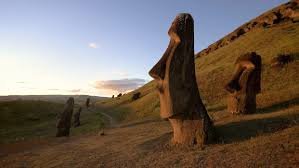
The most striking feature of Easter Island is, without a doubt, the Moai. These colossal stone statues, carved from volcanic tuff, stand as silent sentinels guarding the coastline. But who were they, and how did they get there?
- Who built them? The ancient Rapa Nui people carved these statues to represent their ancestors, believing they projected mana (spiritual power) over the community.
- The Mystery of Transport: For decades, researchers wondered how multi-ton statues were moved across the island. Local legends suggest the statues “walked,” a theory that modern archaeologists have partially validated through experiments with rocking motions using ropes.
- The Eyes: Many Moai were originally fitted with coral eyes, bringing the statues “to life” and connecting the physical world with the spiritual realm.
To learn more about the official preservation of these sites, you can explore the UNESCO World Heritage Centre, where Rapa Nui is recognized for its outstanding universal value.
The Rapa Nui Culture: Resilience and Heritage
Beyond the stone giants, the heart of the island lies in its people. The Rapa Nui culture is a testament to human resilience. Despite facing ecological collapses and colonial hardships, the descendants of the original Polynesian settlers continue to keep their traditions alive.
Visitors to the main town, Hanga Roa, can experience traditional dances, crafts, and a deep-rooted connection to the land. The island is not just an open-air museum; it is a living, breathing community dedicated to protecting its ancestral legacy.
Planning Your Visit: Tips for the Modern Explorer
Visiting Easter Island is a bucket-list adventure, but it requires careful planning due to its extreme isolation. Here are a few essential tips:
- Flight Access: Most travelers fly via Santiago, Chile. Flights are limited and often sell out quickly.
- Sustainable Tourism: The island’s ecosystem is fragile. Always follow the guidelines provided by the National Park Rapa Nui to ensure the statues remain preserved for future generations.
- Must-See Spots: Don’t miss Ahu Tongariki, the largest ceremonial platform, and Rano Raraku, the volcanic quarry where most Moai were carved.
Conclusion: A Legacy Carved in Stone
Easter Island is more than a geographical curiosity; it is a mirror reflecting the heights of human ambition and the fragility of our environment. Whether you are drawn by the scientific mysteries or the spiritual energy of the Moai, Rapa Nui promises a journey that will change your perspective on history and humanity.
For those seeking deeper historical context on Pacific migrations, Britannica provides an excellent academic overview of the island’s origins.