
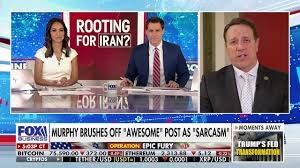
Political Clash: Rep. Pat Fallon Slams Sen. Chris Murphy’s Controversial Tweet on Iran
In the fast-paced world of digital diplomacy, a single tweet can ignite a national firestorm. This was exactly the case in a recent heated segment of ‘The Bottom Line’ on Fox News, where Rep. Pat Fallon (R-Texas) took aim at the Democratic Party’s strategic approach to Iran.
The Spark: A Tweet That Divided Opinion
The controversy centers on a specific tweet posted by Senator Chris Murphy. While social media is often used for quick updates, in the realm of foreign policy, it can be perceived as a tool for provocative signaling. Rep. Pat Fallon criticized the content of Murphy’s message, arguing that it reflects a broader, flawed strategy by Democrats in handling the volatile situation with Iran.
According to Fallon, the rhetoric used in these digital communications undermines U.S. strength and provides an opening for adversaries. The debate highlights a growing divide in Washington regarding:
- n
- Diplomatic Engagement: Whether a softer tone on social media fosters peace or signals weakness.
- National Security: The impact of public political statements on clandestine intelligence and strategic operations.
- Bipartisanship: The increasing difficulty of reaching a consensus on Middle Eastern foreign policy.
Why This Matters for U.S. Foreign Policy
The clash between Rep. Fallon and Sen. Murphy is more than just a social media spat; it represents two fundamentally different philosophies on how the United States should project power globally. While some argue for a more communicative and diplomatic approach via platforms like X (formerly Twitter), others believe in a policy of maximum pressure and strategic silence.
To better understand the complexities of current diplomatic relations, it is essential to look at official guidelines provided by the U.S. Department of State, which manages the formal channels of international communication.
The Influence of ‘The Bottom Line’
As seen on ‘The Bottom Line’, these discussions often move from the digital sphere of a tweet to the televised arena, shaping public opinion and putting pressure on policymakers. As the 2026 political landscape evolves, the intersection of social media and foreign policy will undoubtedly remain a flashpoint for contention.
Stay tuned for more updates on how digital communication is reshaping the political landscape in Washington.



