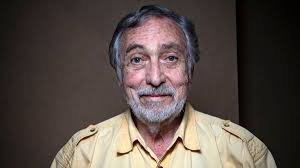
The Final Curtain: Remembering Luis Brandoni
“I am not afraid of death. I know it will happen to all of us, but I admit that leaving would cause me great sorrow.” These poignant words, spoken by Luis Brandoni, perfectly captured his serene yet profound perspective on the passage of time. The titan of Argentine theater and cinema passed away on Monday at the age of 86, following complications from a domestic accident. His departure marks the end of an era, leaving a void in the heart of the arts, labor rights, and the public life of Argentina.
Carlos Rottemberg, a prominent producer, summarized the loss: “With Beto, the last great actor of an unforgettable generation is gone. He was a driving force for national theater, and his commitment extended far beyond the stage.”
A Master of the Stage and Screen
Born as Adalberto Luis Brandoni on April 18, 1940, in Dock Sud, Buenos Aires, Brandoni spent over six decades redefining the archetype of the Argentine actor. His career was a masterclass in versatility, spanning across cinema, television, and the theater he loved most.
Cinematic Brilliance
With over 60 films to his credit, Brandoni became a household name through legendary titles such as:
- La Patagonia rebelde: A stark portrayal of social conflict.
- Esperando la carroza: Featuring the iconic “three empanadas” scene that became a permanent part of the Argentine cultural lexicon.
- La Odisea de los giles: A modern success showing his enduring relevance.
The Hollywood Connection
Brandoni’s talent transcended borders. One of the most fascinating chapters of his life was his deep friendship with Oscar-winner Robert De Niro. This bond began in 1986 while filming Made in Argentina and culminated in the 2023 series Nada on Star+, where the two shared the screen, blending two different worlds of acting excellence.
Beyond the Spotlight: A Life of Activism
Luis Brandoni was more than an entertainer; he was a fierce defender of workers’ rights. As the General Secretary of the Argentine Actors Association, he fought tirelessly for professional dignity, a path that often put him in the crosshairs of political violence.
His courage was tested during the darkest years of the 1970s. After facing threats from the Triple A, he sought temporary exile in Mexico. Upon his return, in 1976, he was kidnapped and taken to the notorious Automotores Orletti clandestine detention center. Despite the trauma, his spirit remained unbroken.
Political Trajectory
His alignment with the Unión Cívica Radical (UCR) solidified in 1982. Brandoni became a trusted advisor to President Raúl Alfonsín and later served as a provincial deputy and a parliamentarian for Mercosur. He always maintained that while politics was a “complicated flaw” full of frustrations, he never compromised his decency.
Roots, Passion, and Personal Life
Brandoni’s character was forged in the working-class neighborhood of Dock Sud. His values were shaped by his parents, José Domingo and Luisa Valentina, and a childhood filled with the sounds of neighborhood cinema and a lifelong passion for River Plate.
His personal life was as rich and complex as his career. He shared 33 years of marriage with actress Martha Bianchi, the mother of his daughters, and later found companionship and professional partnership with Mónica López. In his final years, he found happiness and affection alongside director Saula Benavente.
An Indelible Mark on Culture
Until his final days, Brandoni remained an active force in the theater, recently captivating audiences in the play Quién es quién alongside Soledad Silveyra. For him, theater was a “living art”—the only place where an actor could truly feel the immediate impact of their work.
Luis Brandoni leaves behind a legacy that balances the grace of the arts with the grit of political struggle. He was a man of contradictions and triumphs, a voice of honesty in a complex world, and an artist who taught generations that the true meaning of success lies in commitment to one’s people and one’s craft.