The Student vs. The Master: A Battle for the Crown
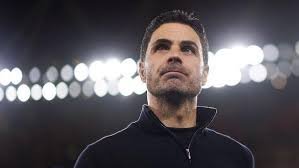
In the high-stakes world of the Premier League, few narratives are as compelling as the clash between Mikel Arteta and Pep Guardiola. Having served as Guardiola’s assistant at Manchester City before taking the helm at Arsenal in 2019, Arteta is no longer just a student—he is a direct challenger to his mentor’s dominance.
With the title race reaching a boiling point, the tension is palpable. While Arsenal has shown incredible resilience, the momentum has recently shifted toward the reigning champions. For Arteta, the rallying cry has been “no fear, pure fire.” But as the season enters its final stretch, will passion be enough, or will tactical ingenuity decide the fate of the trophy?
Breaking Down the Tactics: How City Nullified the Gunners
Recent encounters have revealed a fascinating tactical struggle. In their latest meeting, Guardiola deployed a sophisticated 4-2-4 defensive block that effectively paralyzed Arsenal’s build-up play. Here is how City managed to stifle the Gunners:
- Central Blockage: Erling Haaland and Rayan Cherki were tasked with sealing the middle of the pitch, preventing Arsenal from accessing their creative midfielders.
- Wing Pressure: Antoine Semenyo and Jeremy Doku pressed the centre-backs aggressively, angling their bodies to block passing lanes toward the full-backs.
- Forcing the Long Ball: By denying short options, City tempted Arsenal into playing long balls, which were easily mopped up by City’s disciplined back four.
Interestingly, Arsenal faced similar struggles against Bournemouth, who used a more aggressive man-to-man press. Both teams successfully funneled Arsenal’s play toward the left, putting immense pressure on Gabriel to dictate the game—a role typically handled more comfortably by William Saliba.
The Path to Victory: Arsenal’s Tactical Pivot
To break the deadlock, Arteta has begun experimenting with novel solutions. One of the most promising shifts has been the utilization of Kai Havertz in a more central, advanced role. By pairing Havertz with the creative spark of Eberechi Eze, Arsenal has found a way to make the ball “stick” in the final third, creating space for late arrivals in the box.
Key Strategic Adjustments for Arsenal:
- Creating Overloads: Following a blueprint similar to Premier League heavyweights like Liverpool, Arsenal is attempting to create three-v-two situations in midfield to bypass the first line of pressure.
- Dynamic Movement: Utilizing midfielders like Declan Rice to drop deep and drag markers out of position, opening gaps for the likes of Ben White to exploit.
- Exploiting Transitions: Leveraging the pace of Gabriel Martinelli and the physicality of Viktor Gyokeres to punish teams that commit too many players forward during a press.
The X-Factor: The Threat of Nico O’Reilly
While Arsenal focuses on their attack, they must remain vigilant regarding Manchester City’s rising star, Nico O’Reilly. The 21-year-old has become a tactical nightmare for opponents due to his “in-between” positioning. He doesn’t fit the mold of a traditional left-back or winger, often arriving in unmarked spaces to deliver lethal blows.
Arsenal’s struggle to contain O’Reilly—alternating between Bukayo Saka and Martin Zubimendi—highlights a vulnerability that Guardiola will undoubtedly look to exploit in their next encounter.
The Mental Game: Can Arsenal Hold On?
Beyond the X’s and O’s, this title race is a test of mental fortitude. The injury to Bukayo Saka has undoubtedly dampened Arsenal’s ability to dominate the final third, and the physical toll of a grueling season is evident.
However, if Arteta can maintain the “pure fire” within his squad and refine the tactical tweaks needed to bypass City’s press, the Gunners may be closer to a historic campaign than critics suggest. The battle of Man City vs Arsenal is more than just a game; it is a masterclass in modern football strategy.
Stay tuned to BBC Sport for live updates and in-depth analysis of the Premier League run-in.