
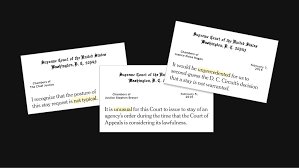
The term “shadow docket” has been gaining traction in legal and political discourse, but what exactly *is* it? Simply put, the shadow docket refers to the Supreme Court’s ability to rule on cases without full briefing, oral arguments, or published opinions. These decisions are often made through orders, summary reversals, and denials of certiorari – actions that happen outside the typical, highly visible process of the Court.
The Rise of the Shadow Docket
While the shadow docket isn’t new, its use has dramatically increased in recent decades. Historically, it was reserved for relatively minor procedural matters. However, in recent years, it’s been increasingly employed to resolve significant legal and policy disputes, often with far-reaching consequences. This shift has raised concerns about transparency and due process.
Several factors contribute to this rise. Increased caseload, a desire for efficiency, and a perceived need to quickly address emergency matters are often cited. However, critics argue that the shadow docket allows the Court to sidestep public scrutiny and potentially issue rulings that are ideologically driven without the same level of deliberation as traditional cases. A detailed analysis by SCOTUSblog provides a comprehensive overview of its usage in 2022.
How Does the Shadow Docket Work?
Unlike typical Supreme Court cases, which involve extensive briefing, oral arguments, and a published opinion explaining the Court’s reasoning, shadow docket decisions are often brief and lack detailed explanations. Here’s a breakdown of common mechanisms:
- Orders: These are directives issued by the Court, often regarding procedural matters or administrative issues.
- Summary Reversals: The Court reverses a lower court’s decision without hearing arguments or issuing a full opinion.
- Denials of Certiorari: The Court declines to hear a case, effectively letting the lower court’s decision stand. While seemingly routine, denials can have significant implications, especially when dissenting justices issue statements explaining their disagreement.
Impact and Controversy
The shadow docket has been at the center of several high-profile controversies. For example, decisions regarding the Texas abortion ban and challenges to the Biden administration’s vaccine mandates were largely decided through the shadow docket. These cases highlight the potential for the shadow docket to shape policy with limited public debate.
Critics argue that the lack of transparency and detailed reasoning undermines the Court’s legitimacy and erodes public trust. They contend that the shadow docket allows the Court to act more like a legislative body, making policy decisions rather than interpreting the law. The Brennan Center for Justice offers extensive research and analysis on the shadow docket and its implications.
The Future of the Shadow Docket
The debate surrounding the shadow docket is likely to continue. Calls for greater transparency and reform are growing, with some advocating for the Court to provide more detailed explanations for its shadow docket decisions. Whether the Court will respond to these calls remains to be seen. Understanding the shadow docket is crucial for anyone interested in the workings of the Supreme Court and its impact on American law and society.



