A series of destructive tornadoes ripped through the central United States on Friday afternoon, as a significant tornado outbreak continues to unfold. The volatile weather system rapidly intensified, demonstrating its power with devastating effect.
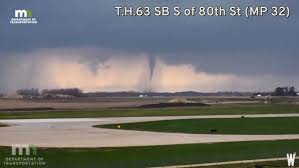
At least two tornadoes tracked through the greater Rochester, Minnesota area, with dramatic footage captured by traffic cameras. While no injuries were reported in Olmsted County, widespread damage was confirmed by the sheriff’s office via Facebook. Marion, Minnesota, bore the brunt of the impact, with approximately 30 homes damaged and another 10 affected in other parts of the county. Images reveal debris-strewn yards and homes with compromised roofs.
Further north, Marathon County, Wisconsin, reported “significant damage” following a tornado passage. Multiple law enforcement agencies responded to the area, though the extent of any injuries remains unclear. In Illinois, Lena experienced extensive structural damage, with drone footage showcasing homes with roofs torn off and possessions scattered within.
Missouri also felt the storm’s fury, as a tornado moved through Belton, causing widespread damage. Police Chief Scott Lyons reported several minor injuries, but emphasized that pre-storm preparations likely mitigated more severe outcomes.
Widespread Threats: Beyond Tornadoes
The threat extends beyond tornadoes, with widespread damaging wind gusts and torrential rainfall compounding the challenges for already impacted areas. This multi-day onslaught has brought not only twisters but also massive hail and historic flooding. Three rare “particularly dangerous situation” tornado warnings were issued – near Cream, Wisconsin; Lena, Illinois; and Marathon County, Wisconsin – signaling a high probability of destructive, long-lived tornadoes.
The most significant tornado threat is concentrated in western Wisconsin, southeastern Minnesota, eastern Iowa, and northwest Illinois. A tornado watch is currently in effect for 26 million people, stretching from Wisconsin to Oklahoma. Beyond tornadoes, destructive winds – potentially reaching 90 mph – and hail, some as large as softballs, are expected from Oklahoma City to Green Bay, Wisconsin, particularly during Friday evening.
This outbreak follows nearly four dozen tornado reports and over 350 hail reports – including softball-sized hail – across a vast region from Texas to the Great Lakes since Monday. The situation is a stark reminder of the power and unpredictability of severe weather.
The Science Behind the Storms
A surge of jet stream energy interacting with Gulf moisture fueled the tornado outbreak. A Level 4 of 5 risk of severe thunderstorms is in place across northwest Oklahoma to western Missouri, including Kansas City and Wichita. The primary threats in this area are giant hail (near softball size) and destructive winds exceeding 80 mph, with the possibility of isolated tornadoes.
A Level 3 of 5 risk area extends further north and east, encompassing eastern Iowa, Wisconsin, and Illinois, including major cities like St. Louis, Chicago, and Madison. This region faces the highest concern for intense tornadoes (EF3 or stronger), particularly from La Crosse, Wisconsin, to Davenport, Iowa, and Moline, Illinois.
The initial storms in the western part of the threat zone are most likely to produce tornadoes and large hail. As these storms move east, widespread damaging winds of 60-90 mph are expected, capable of uprooting trees and causing power outages. Tornadoes remain a possibility along the leading edge of these systems.
Flooding Adds to the Crisis
Flash flooding is also a major concern, particularly in areas already saturated from recent rainfall, including Chicago and Milwaukee, where numerous water rescues have been conducted. The Great Lakes region has experienced one of its wettest springs on record, exacerbated by significant snowmelt from a harsh winter.
Rivers in Michigan and Wisconsin have already reached major or record flood levels in over 20 locations. The Wolf River in Wisconsin is nearly a foot above its record flood stage, inundating streets in Shiocton. Evacuations have been ordered, and most streets are impassable. Similar evacuation advisories are in place for low-lying areas of Waupaca County.
In Michigan, officials are closely monitoring stressed dams, with mandatory evacuations issued for those below the Croton Dam in Newaygo County. The Muskegon River is in major flood, and residents near the Cheboygan dam complex have been advised to prepare for potential evacuation. Crews are working tirelessly to protect these critical infrastructure points.
The situation remains dynamic and dangerous. Residents in affected areas are urged to stay informed, heed warnings from local authorities, and prioritize their safety. A breather is expected starting Sunday as a change in weather patterns brings cooler temperatures to the storm-weary central US.
Source: CNN