Robinson’s impact extended far beyond the baseball field. He became a vocal advocate for civil rights, using his platform to speak out against injustice and inequality. He actively supported the NAACP and other organizations fighting for racial equality. His courage inspired a generation and helped to pave the way for further progress in the Civil Rights Movement. He understood the symbolic power of his position and used it to challenge the status quo.
A Lasting Legacy
Jackie Robinson’s story is a testament to the power of courage, determination, and the unwavering belief in equality. He didn’t just break a baseball record; he broke a barrier that had long divided America. His number 42 is retired across all of Major League Baseball, a permanent tribute to his extraordinary life and enduring legacy. Every year on April 15th, known as Jackie Robinson Day, players across MLB wear #42 to honour his contribution. He remains a symbol of hope and a reminder that one person can make a profound difference in the world.
In 1947, Branch Rickey, the general manager of the Brooklyn Dodgers, made a groundbreaking decision. He signed Jackie Robinson, making him the first African American to play Major League Baseball in the modern era. This wasn’t simply a baseball move; it was a calculated act of social change. Rickey understood the potential backlash and chose Robinson specifically for his character and ability to withstand intense pressure.
Robinson’s debut with the Dodgers on April 15, 1947, was a watershed moment. He endured relentless racial slurs, threats, and discrimination from opposing players, fans, and even some teammates. Despite this, he persevered, demonstrating remarkable composure and skill. He played first base and quickly became a fan favourite, leading the Dodgers to a National League pennant in 1947.
Beyond the Diamond: A Civil Rights Advocate
Robinson’s impact extended far beyond the baseball field. He became a vocal advocate for civil rights, using his platform to speak out against injustice and inequality. He actively supported the NAACP and other organizations fighting for racial equality. His courage inspired a generation and helped to pave the way for further progress in the Civil Rights Movement. He understood the symbolic power of his position and used it to challenge the status quo.
After retiring from baseball in 1956, Robinson continued his activism, working as a businessman and commentator. He remained a powerful voice for social justice until his untimely death in 1972. His legacy continues to inspire athletes and activists today. You can learn more about his life and work at the Jackie Robinson Foundation.
A Lasting Legacy
Jackie Robinson’s story is a testament to the power of courage, determination, and the unwavering belief in equality. He didn’t just break a baseball record; he broke a barrier that had long divided America. His number 42 is retired across all of Major League Baseball, a permanent tribute to his extraordinary life and enduring legacy. Every year on April 15th, known as Jackie Robinson Day, players across MLB wear #42 to honour his contribution. He remains a symbol of hope and a reminder that one person can make a profound difference in the world.
Born Jack Roosevelt Robinson on January 31, 1919, in Cairo, Georgia, Robinson faced hardship from a young age. Raised in poverty by a single mother, he excelled in multiple sports at UCLA, becoming the university’s first athlete to letter in four sports: baseball, basketball, football, and track. This exceptional athletic ability foreshadowed the impact he would have on the world of sports.
However, his path wasn’t without obstacles. Despite his talent, racial prejudice limited opportunities. After being honourably discharged from the Army in 1944, where he faced discrimination despite his service, Robinson played professional baseball in the Negro Leagues for the Kansas City Monarchs. This experience further solidified his determination to break down barriers.
Breaking the Color Barrier with the Brooklyn Dodgers
In 1947, Branch Rickey, the general manager of the Brooklyn Dodgers, made a groundbreaking decision. He signed Jackie Robinson, making him the first African American to play Major League Baseball in the modern era. This wasn’t simply a baseball move; it was a calculated act of social change. Rickey understood the potential backlash and chose Robinson specifically for his character and ability to withstand intense pressure.
Robinson’s debut with the Dodgers on April 15, 1947, was a watershed moment. He endured relentless racial slurs, threats, and discrimination from opposing players, fans, and even some teammates. Despite this, he persevered, demonstrating remarkable composure and skill. He played first base and quickly became a fan favourite, leading the Dodgers to a National League pennant in 1947.
Beyond the Diamond: A Civil Rights Advocate
Robinson’s impact extended far beyond the baseball field. He became a vocal advocate for civil rights, using his platform to speak out against injustice and inequality. He actively supported the NAACP and other organizations fighting for racial equality. His courage inspired a generation and helped to pave the way for further progress in the Civil Rights Movement. He understood the symbolic power of his position and used it to challenge the status quo.
After retiring from baseball in 1956, Robinson continued his activism, working as a businessman and commentator. He remained a powerful voice for social justice until his untimely death in 1972. His legacy continues to inspire athletes and activists today. You can learn more about his life and work at the Jackie Robinson Foundation.
A Lasting Legacy
Jackie Robinson’s story is a testament to the power of courage, determination, and the unwavering belief in equality. He didn’t just break a baseball record; he broke a barrier that had long divided America. His number 42 is retired across all of Major League Baseball, a permanent tribute to his extraordinary life and enduring legacy. Every year on April 15th, known as Jackie Robinson Day, players across MLB wear #42 to honour his contribution. He remains a symbol of hope and a reminder that one person can make a profound difference in the world.
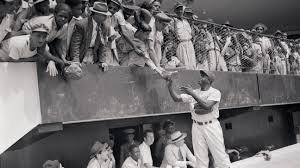
Jackie Robinson. The name resonates with courage, resilience, and the relentless pursuit of equality. More than just a baseball player, Robinson was a pivotal figure in the American Civil Rights Movement, a man who bravely challenged the deeply ingrained segregation of Major League Baseball and, in doing so, helped to change the nation.
Early Life and Athletic Prowess
Born Jack Roosevelt Robinson on January 31, 1919, in Cairo, Georgia, Robinson faced hardship from a young age. Raised in poverty by a single mother, he excelled in multiple sports at UCLA, becoming the university’s first athlete to letter in four sports: baseball, basketball, football, and track. This exceptional athletic ability foreshadowed the impact he would have on the world of sports.
However, his path wasn’t without obstacles. Despite his talent, racial prejudice limited opportunities. After being honourably discharged from the Army in 1944, where he faced discrimination despite his service, Robinson played professional baseball in the Negro Leagues for the Kansas City Monarchs. This experience further solidified his determination to break down barriers.
Breaking the Color Barrier with the Brooklyn Dodgers
In 1947, Branch Rickey, the general manager of the Brooklyn Dodgers, made a groundbreaking decision. He signed Jackie Robinson, making him the first African American to play Major League Baseball in the modern era. This wasn’t simply a baseball move; it was a calculated act of social change. Rickey understood the potential backlash and chose Robinson specifically for his character and ability to withstand intense pressure.
Robinson’s debut with the Dodgers on April 15, 1947, was a watershed moment. He endured relentless racial slurs, threats, and discrimination from opposing players, fans, and even some teammates. Despite this, he persevered, demonstrating remarkable composure and skill. He played first base and quickly became a fan favourite, leading the Dodgers to a National League pennant in 1947.
Beyond the Diamond: A Civil Rights Advocate
Robinson’s impact extended far beyond the baseball field. He became a vocal advocate for civil rights, using his platform to speak out against injustice and inequality. He actively supported the NAACP and other organizations fighting for racial equality. His courage inspired a generation and helped to pave the way for further progress in the Civil Rights Movement. He understood the symbolic power of his position and used it to challenge the status quo.
After retiring from baseball in 1956, Robinson continued his activism, working as a businessman and commentator. He remained a powerful voice for social justice until his untimely death in 1972. His legacy continues to inspire athletes and activists today. You can learn more about his life and work at the Jackie Robinson Foundation.
A Lasting Legacy
Jackie Robinson’s story is a testament to the power of courage, determination, and the unwavering belief in equality. He didn’t just break a baseball record; he broke a barrier that had long divided America. His number 42 is retired across all of Major League Baseball, a permanent tribute to his extraordinary life and enduring legacy. Every year on April 15th, known as Jackie Robinson Day, players across MLB wear #42 to honour his contribution. He remains a symbol of hope and a reminder that one person can make a profound difference in the world.