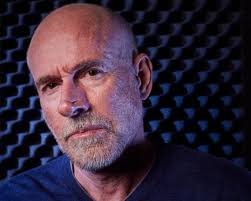
When Scott Galloway’s latest book, Notes on Being a Man, hit shelves last month, it swiftly climbed bestseller lists, igniting conversations far and wide. The renowned US author, tech entrepreneur, and podcaster, known for his incisive critiques and bold predictions, offers a deeply personal yet data-driven exploration of contemporary masculinity. But who is Scott Galloway, and what truly sets his perspective apart in an often-polarized debate?
Beyond the Alpha Persona: A Progressive Voice
On the surface, one might be tempted to lump Galloway, a successful 61-year-old Californian investor and podcaster, into the “manosphere” crowd. Yet, he is anything but. Often described as a “progressive Jordan Peterson” or “Gordon Gekko with a social conscience,” Galloway leans liberal, is surprisingly sensitive, and candidly admits he doesn’t possess all the answers. Instead, his book, published by Simon & Schuster, serves as a humble reflection on his own successes and, more importantly, his missteps in becoming a man.
The Modern Masculinity Crisis: Data-Driven Concerns
Galloway, a marketing professor at New York University, passionately argues that young men face a genuine crisis. Drawing on compelling research from experts like Richard Reeves (Of Boys and Men) and Jonathan Haidt (The Anxious Generation), he paints a concerning picture:
- Rising school suspensions and male unemployment rates.
- Increased rates of addiction and loneliness among young men.
- A significant drop in college completion rates for men, with women outpacing them two-to-one in the next five years.
He even controversially links the struggles of men to political shifts, suggesting it played a role in the election of figures like Donald Trump, particularly among young men and their mothers.
Galloway’s Prescriptions for Men: Codes and Maxims
His book distills solutions into pithy maxims, some resonating as common sense, others feeling decidedly old-school. A core tenet: “men protect, provide, and procreate.” While acknowledging these roles aren’t exclusive to men, he emphasizes their societal expectations. “Protect” is about using strength for good, like breaking up fights. “Provide” often translates to economic stability. Galloway candidly shares his “boomer” dating advice to his sons—“when you’re in the company of women, you pay for everything”—backing it with data suggesting society harshly judges men who are not economically viable. This, he contends, leads to a lack of “mating opportunities” and a downward spiral into loneliness and online extremism.
Tech’s Role and the “Asexual, Asocial Male”
A vocal critic of the tech industry, Galloway highlights its complicity in exacerbating these issues. Social media, he argues, offers easy dopamine hits, fostering an environment where young men have fewer reasons to engage with the real world. His stark warning is chilling: “I worry we are literally evolving a new breed of asexual, asocial male.” This concern is a recurring theme in his popular podcasts, Prof G Pod and Pivot, co-hosted with Kara Swisher.
Distinguishing from Jordan Peterson
Galloway expresses surprising respect for Jordan Peterson, acknowledging his pioneering role in addressing male issues. However, he sharply diverges on Peterson’s “conservative viewpoint that sometimes… takes women’s rights away,” particularly the notion that “women are happiest when they’re in a supporting role to men.” Galloway firmly states he’s not blaming women or advocating for their economic disadvantage. Instead, he asserts, “men need to level up,” and society must implement programs to support all young people. As he argued in a TED Talk, the real issues are broader societal failures, not a gender war.
The Personal Behind the Professor: Lessons from Loss
Beneath the data-driven analysis lies a profound personal story. Scott Galloway’s own father abandoned his family when Scott was nine, leaving his impoverished mother to raise him. This experience, coupled with a difficult relationship with an alcoholic grandfather, shaped his understanding of male role models. He candidly shares his breakthrough: letting go of a “scorecard” in relationships, opting instead to be the son, husband, and friend he wanted to be, regardless of past hurts. This personal journey underpins his thesis that the absence of a male role model through “death, divorce or abandonment” can be a pivotal moment for a boy going “off the tracks.”
Success, Privilege, and Purpose
Despite his immense success—he sold his business intelligence firm L2 for $155 million and estimates his net worth around $150 million—Galloway maintains he was “born on third base,” attributing much to luck and structural advantages. His drive for economic security stemmed from his humble upbringing. Now, he’s shifting focus, planning a return to the US to engage in political activism, aiming to build a Democrat-friendly podcast network. He believes that when a country struggles, that’s precisely when one should “go home.”
True Masculinity and the Power of Vulnerability
Galloway firmly rejects the “coarseness and cruelty” he sees in figures like Donald Trump and Elon Musk, calling their actions “could not be more anti-masculine.” His role models include Muhammad Ali and, surprisingly, Margaret Thatcher, citing their strength. He also admires Keanu Reeves for his kindness and humility. Galloway admits to his own “impostor syndrome” as a father, acknowledging he isn’t always as present as he’d like.
This vulnerability extends to his advocacy for men crying. “For the last 3,000 years, we’ve been taught if you demonstrate weakness… some other dude might take your shit.” But in modern society, he argues, emotional expression is liberating and deeply human. He shares his own experience of not crying for years, now finding immense benefit in slowing down time and connecting with emotions. This openness, he suggests, is what truly sets him apart from many peers, fostering deeper connections with others, especially other men.
Conclusion: A Call to Level Up
Scott Galloway offers a refreshing, albeit sometimes provocative, voice in the conversation about men. Blending rigorous academic insight with raw personal experience, he challenges entrenched notions of masculinity, urging men to “level up” emotionally, economically, and socially. His work is a powerful call for greater self-awareness, empathy, and a redefinition of what it truly means to be a man in the 21st century.