
Disney Cruise Line: A Deep Dive into Sustainability and Innovation
April 12, 2026
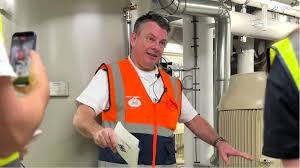
“We are below the water line. The water is one deck higher. You’re walking underneath.” These words, spoken with a mischievous smile, come from Johan Blokstra, Chief Engineer of the Disney Destiny. He’s a master of the intricate network of pipes, wires, and machinery that power this incredible ship. Recently, Disney Parks Blog was granted an exclusive first-ever tour of a Disney Cruise Line ship’s inner workings. And here, below Deck 1, we discovered how the entire Disney Wish class of ships operate – and, crucially, how they’re designed to conserve every possible resource.
Johan moves quickly, so let’s dive in! Just minutes ago, our small group passed through an unassuming door on Deck 1. Like the famous utilidors in Magic Kingdom, this hidden thoroughfare allows crew members quick access to guest areas. It was just before dinner, and a crew member headed towards Pride Lands: Feast of the Lion King (easily identified by the costume) passed us. Right behind, a group in Worlds of Marvel vests pointed towards my bright yellow safety vest. For a moment, I felt like part of the crew!
The Heart of the Ship: Engine Control Room
Johan calls the Engine Control Room “the heart of the ship,” and it’s where every system on the Disney Destiny is monitored, optimized, and managed. While photography wasn’t permitted in this area, the experience was unforgettable. To give you a sense of scale, the Engine Control Room was larger than the chess room on the Millennium Falcon, but smaller than the Xandarian teleport room where the Cosmic Generator goes missing.
The room blended analog buttons and switches with touchscreen displays and four large monitors lining the walls. A deep hum and steady whooshes of machinery filled the air, punctuated by occasional beeps and bloops. A main console stretched across the room, with crew members seated in chairs, within easy reach of phones, screens, and keyboards. It was exactly what you’d imagine an Engine Control Room to be.
Pointing to a shifting web-like graph, Johan explained, “This is how we control our power plant, our LNG [liquefied natural gas] plant… air conditioning, everything that’s going on in the ship is being controlled from here.”
A Commitment to Reducing Emissions
Disney Cruise Line is deeply committed to reducing emissions across its entire fleet. The ABB Ability OCTOPUS system, a high-tech energy efficiency coach, is a key component of this effort. This system cuts down on fuel usage and emissions by providing the crew with instant, easy-to-understand guidance on the most efficient way to run every part of the ship, from LED lighting to fan and pump speeds. This dedication results in Wish Class ships emitting 20 percent less greenhouse gases than similarly sized vessels without these innovations.
Even the ship’s design contributes to fuel savings. The hydrodynamic hull and optimized propulsion system save nearly 1,800 tons of fuel per ship annually.
Recycling and Waste Reduction
On this warm day docked at Disney Castaway Cay, it was easy to understand the system. Johan explained that one engine was running, converting it into electricity, while propulsion was off and chillers were working for air conditioning. The energy-efficient HVAC systems save nearly 700 tons of fuel per ship each year. The system constantly monitors the vessel’s condition to ensure maximum reliability and efficiency.
We also visited the Recycling Room, found on every Disney Cruise Line ship. Here, teams sort waste to process recyclable materials like glass, paper, cardboard, metal, and plastic. Big can crushers and cardboard balers prepare materials for recycling, diverting them from landfills. Up to 400 tons of materials are recycled annually across the Disney fleet.
Disney Cruise Line has nearly eliminated single-use plastics from its ships and island destinations in The Bahamas, aiming for zero waste to landfills. From reusable cutlery and cereal dispensers to paper cups and lids for your morning coffee, these simple swaps make a significant difference. Every time you choose these onboard items, you’re partnering with Disney Cruise Line to reuse, recycle, and rethink our impact.
Down Below: Exploring the Engines
Our journey continued down a series of tight, winding stairways (some requiring a backward descent!). We eventually found ourselves on Deck 31(c) – a bit of a mystery, even to us! – to see the engines themselves.
We emerged into a forest of pipes and beams, with gauges and warning stickers adorning the walls. Bundles of multicolored wire ran like arteries, connecting to countless machines. We donned earplugs to manage the din and navigated the complex space.
The Disney Destiny houses five huge engines. We took a catwalk above Engine 1 for a closer look. Johan explained that the engines don’t run constantly; they’re carefully managed to meet the ship’s needs. While each engine boasts significant horsepower, its use is optimized in the Engine Control Room for maximum efficiency.
Disney Cruise Line has invested in new fuels, including liquefied natural gas (LNG) onboard the Disney Destiny. The LNG fuel is stored in three-deck-tall tanks at a cryogenic temperature of 250 degrees Fahrenheit below zero. Because the fuel expands over 600 times as it warms, it’s stored at this cold temperature to minimize space requirements.
We also learned about the Cold Recovery Unit, which uses hot water from the engines for cooling. This process creates cold water that’s recycled back into the air conditioning system. “That again helps us with the generation of the air conditioning upstairs. We use the energy to help us keep the ship cold as well,” Johan explained with enthusiasm.
The air conditioning system also reuses water. Condensation from the system is turned into fresh water for onboard laundry facilities, saving approximately 10 million gallons of water annually. Up to 99% of the freshwater onboard a Wish class ship is produced onboard using energy-efficient reverse osmosis systems.
Even wastewater is carefully processed through the Advanced Wastewater Treatment system to ensure it’s safe for marine life before being released. Johan showed us a sample of the purified water, confirming its cleanliness.
Finally, we climbed back up the narrow stairways and thanked Johan for this exclusive look at the inner workings of a Wish class ship. His enthusiasm for Disney’s commitment to sustainability was truly inspiring. He’s always looking ahead, believing that even better solutions are on the horizon.
Learn more about Disney Cruise Line’s commitment to conserving our oceans via Disney Planet Possible, and The Walt Disney Company’s environmental goals at impact.disney.com.



