
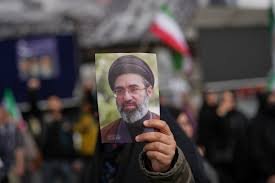
Recent online users encountering issues accessing the Times of Israel website have been prompted with a message requesting specific details – IP address (such as 158.101.121.14), Cloudflare Ray ID (like 9eb045bd4967879b), and the problematic URL. While these technical details are crucial for resolving website access problems, a separate, and significantly more complex, topic has been gaining attention: Mojtaba Khamenei, son of Iran’s Supreme Leader Ayatollah Ali Khamenei.
Who is Mojtaba Khamenei?
Mojtaba Khamenei is increasingly viewed as a key figure in Iran’s political landscape, and a potential successor to his father. Unlike many of Iran’s political elite who rose through the ranks of the clergy, Mojtaba has largely operated outside of traditional religious structures. He’s known for his close ties to the Islamic Revolutionary Guard Corps (IRGC) and his influence over various sectors, including security and economic affairs.
His influence isn’t officially defined by a formal position. He doesn’t hold a government post, but operates as an advisor and confidant to his father. This lack of official title makes assessing his power challenging, but reports from intelligence agencies and political analysts consistently point to a significant and growing role in decision-making processes.
The Controversies Surrounding Mojtaba Khamenei
Mojtaba Khamenei is a controversial figure, both domestically and internationally. He’s been accused of corruption, benefiting from illicit financial dealings, and playing a role in the suppression of dissent. Allegations of involvement in the 2009 post-election crackdown, where protestors were violently suppressed, have also surfaced. These accusations are difficult to verify independently due to the opaque nature of Iran’s political system.
Furthermore, his perceived role in consolidating power within the Khamenei family has raised concerns about the future of Iran’s political system. Critics argue that this could lead to a hereditary succession, undermining the principles of the Islamic Republic. The U.S. Treasury Department has sanctioned Mojtaba Khamenei for his alleged involvement in human rights abuses and corruption. You can find more information on these sanctions at the U.S. Department of the Treasury website.
Mojtaba Khamenei and Iran’s Future
As Ayatollah Ali Khamenei ages, the question of succession becomes increasingly pressing. While Iran’s constitution outlines a complex process for selecting a new Supreme Leader, Mojtaba Khamenei is widely considered a frontrunner. His close ties to the IRGC and his influence within the establishment position him favorably. However, his lack of traditional religious credentials and the controversies surrounding him could present obstacles.
Understanding Mojtaba Khamenei’s role is crucial for comprehending the dynamics of Iranian politics and anticipating the country’s future trajectory. His actions and decisions will undoubtedly shape Iran’s domestic and foreign policies for years to come. For further analysis, consider resources from the Council on Foreign Relations.



