Artemis II: The Crew’s Journey Home
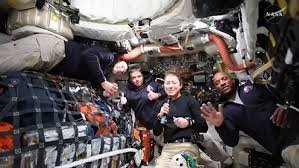
After a successful 10-day lunar mission, the crew of the Orion spacecraft is preparing for their return to Earth, scheduled for 8:07 PM EDT. The four astronauts, including Canadian Jeremy Hansen, are reviewing critical safety protocols with flight controllers at NASA’s Johnson Space Center in Houston, Texas.
The return journey isn’t without its challenges. A final trajectory correction maneuver is planned to ensure Orion is on course for splashdown. The astronauts will also reconfigure the cabin and don their spacesuits in preparation for the intense reentry phase.
The Critical Reentry Phase
The most critical part of the mission, including high-speed atmospheric reentry and splashdown in the Pacific Ocean, will last less than an hour. First, the crew module will separate from the European Service Module, which powered the capsule around the Moon and on the return trip. The service module will then burn up in the atmosphere.
Following separation, the capsule will orient itself to present its heat shield towards Earth, protecting it during reentry. This reentry differs from the uncrewed Artemis I flight, which experienced a ‘skip’ off the atmosphere. NASA believes this technique caused uneven wear on the heat shield due to gas becoming trapped and creating internal pressure. For Artemis II, a more direct trajectory has been chosen.
Orion will begin its descent at approximately 40,000 km/h. This speed generates extreme heat, turning the air around the heat shield into a plasma reaching nearly 2,800°C. This plasma will disrupt radio signals, causing a communication blackout lasting approximately six minutes – a particularly stressful period for the ground teams.
Splashdown and Recovery
Once the peak heating subsides, the forward bay cover will be jettisoned, and the capsule will begin its vertical descent towards the Pacific Ocean. At 8:00 PM EDT, final braking will begin, utilizing a complex choreography of parachutes.
- Two drogue parachutes will initially slow the capsule to around 494 km/h.
- Three main parachutes will then deploy, reducing Orion’s speed to approximately 27 km/h for a gentle splashdown.
The capsule is expected to land within 10 kilometers of the USS John P. Murtha, a U.S. Navy ship that will recover the four astronauts and retrieve the capsule. The crew will then be transported to Naval Base San Diego for initial medical checks before heading to Johnson Space Center in Houston.
Unlike some Apollo missions, the Artemis II astronauts will not be placed in biological isolation upon their return, as they did not land on the lunar surface, eliminating the risk of bringing back unknown microorganisms.
Learn more about the Artemis program at NASA’s official website.