Russian Air Force: A Growing Threat to NATO?
The Russian air force has undergone a significant transformation since the February 2022 invasion of Ukraine, emerging as a far more dangerous and potent threat to the NATO alliance, according to air combat experts. The conflict has served as a brutal proving ground, providing invaluable combat experience and driving rapid advancements in systems and weaponry.
Lessons Learned in Ukraine
Justin Bronk, an airpower expert at the UK’s Royal United Services Institute, recently asserted that the current iteration of the Russian air force, the VKS, “represents a greater threat to Western air power capabilities in Europe than it did prior to the invasion of Ukraine.” This assessment isn’t based on a simple increase in aircraft numbers, but on a fundamental shift in capability.
Retired US Army Maj. Gen. Gordon “Skip” Davis, former NATO deputy assistant secretary-general for defense investment, emphasizes the need for NATO to reassess its understanding of Russia’s air power. “NATO can’t be complacent with what it thought Russia once was as an air power versus what it is now,” he stated. “Russia is more dangerous now to NATO than it was before the war because of lessons learned.”
Beyond Losses: Increased Production and Modernization
While Russia has sustained losses in Ukraine – approximately 130 fixed-wing aircraft have been shot down or damaged – the impact is less severe than initial figures suggest. Many of the lost aircraft, such as the Su-25SM(3) and Su-34(M), are less critical in a potential conflict with NATO. Crucially, Russia has been able to increase production of key aircraft like the Su-35S, Su-34s, and Su-30SM(2), offsetting losses and bolstering its overall fleet strength.
Furthermore, Russia has strategically preserved its most advanced aircraft and weaponry, focusing on deploying less critical assets to Ukraine. This allows them to continue developing and refining their capabilities for a potential confrontation with NATO.
Enhanced Aircrew Capabilities
The war in Ukraine has also dramatically improved the skill and experience of Russian aircrews. While some experienced pilots have been lost, the sheer volume of combat flying hours has more than compensated for these losses. Previously, Russian pilots generally flew fewer hours than their NATO counterparts. Now, they possess a wealth of valuable combat experience, particularly in high-intensity warfare.
“In most cases, they have vastly improved both pilot and air crew experience in combat and high-intensity warfare,” Davis explained. They’ve also become more proficient in air-to-air engagements, including countering drones.
Upgraded Weaponry and Tactics
Russia has significantly upgraded its weaponry, addressing previous shortcomings in battlefield firepower. They are now employing more effective targeting pods and have improved close air support training. A key development is the integration of longer-range R-37M missiles onto Su-35 jets, substantially increasing their potential threat to NATO air operations.
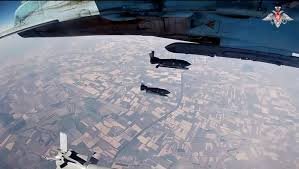
Tim Robinson, a military aviation specialist at the Royal Aeronautical Society, notes that Russia is “doing things smarter: better tactics, new weapons.” The development of stand-off airborne strike capabilities, utilizing glide bombs and missiles, allows them to strike targets from a safer distance, complicating air defense efforts.
A More Formidable Air Defense System
Russia’s already robust air defense system, a cornerstone of its airpower, has also been enhanced. Despite suffering damage in Ukraine, “several hundred batteries of assorted Russian surface-to-air missile (SAM) systems remain in service, and the primary threat systems are also still all in production in their latest variants,” Bronk warns. These systems have become more effective through upgrades and increased operational experience.
Coordinated Threats and NATO’s Response
Russian forces have also improved their coordination between aircraft and ground-based missile systems, presenting a more integrated and challenging threat to NATO aircraft. While Russia doesn’t currently outmatch NATO in overall capability, it represents a “more credible threat.”
Despite these advancements, Bronk predicts Russia would still “struggle significantly in a direct air-to-air clash with Western forces.” However, the potential for a protracted conflict, complicated by Russia’s formidable air defenses, remains a significant concern. NATO is actively learning from the conflict in Ukraine, gathering valuable data on Russian SAM systems and identifying areas for improvement.
While challenges remain, NATO possesses the weaponry to counter these threats, though increasing its presence in Europe is crucial.
Further Reading: RUSI – The VKS and the War in Ukraine