Travel Visa Hurdles: Palestinian Child Finds Hope for Specialist Care in the UK
Amidst ongoing challenges and political complexities, 10-year-old Mariam Sabbah, a Palestinian child who tragically lost her arm during the recent conflict in Gaza, has arrived in the United Kingdom to receive specialist medical care. This journey became possible after facing significant obstacles, including the halting of visitor visas for Palestinians by the previous US administration. Her story highlights the critical need for accessible healthcare and the impact of travel visa policies on vulnerable populations.
From Gaza to the UK: A Journey of Hope
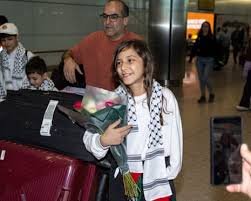
Mariam arrived at Heathrow Airport with her mother, Fatma Salman, and two brothers, greeted by a heartwarming welcome from supporters bearing gifts and well wishes. The family had initially hoped to seek treatment in the United States, but the August 2023 suspension of visitor visas for Palestinians left them in a precarious situation, stranded in Egypt. “We’re happy that we’re here, we never thought we would actually be here in the UK,” shared Salman, expressing her relief and gratitude.
Mariam’s case is particularly poignant, as she is one of over 11,000 patients evacuated from Gaza, according to the World Health Organization (WHO). The WHO estimates that approximately 18,500 patients urgently require medical attention unavailable within Gaza. Her treatment in the UK is being facilitated through privately funded arrangements with the US-based NGO FAJR Global and Project Pure Hope (PPH).
The Role of NGOs and the UK Evacuation Scheme
Project Pure Hope (PPH), a UK-based charity, has been instrumental in evacuating patients and their families to the UK since 2025, establishing a model that influenced the UK government’s recent medical evacuation scheme. The scheme, however, relies heavily on the WHO to identify priority cases and coordination with Israeli authorities, leading to a slow and often arduous process.
The recent suspension of medical evacuations by the WHO, following the tragic death of a contracted worker, has raised serious concerns. Mosab Nasser, co-founder of FAJR Global, warned that this decision would inevitably lead to further loss of life. The ongoing conflict and border closures exacerbate the difficulties in providing essential medical care to those in need.
Calls for Increased Support and Unrestricted Aid Access
Aid organizations are urgently calling on the UK government to increase its efforts and exert pressure on Israeli authorities to allow the unrestricted entry of aid and the reopening of all border crossings. Rohan Talbot, director of advocacy and campaigns at Medical Aid for Palestinians, emphasized the fragility of existing evacuation pathways and the necessity of a ceasefire to ensure safe and effective humanitarian operations. Medical Aid for Palestinians is a leading organization advocating for healthcare access in the region.
Since October 2023, Egypt, the United Arab Emirates, and Qatar have been the primary countries assisting with medical evacuations from Gaza, followed by EU nations, Jordan, and Turkey. While the UK government initially pledged to evacuate up to 300 seriously ill children, only 50 have been successfully brought to the UK with their families as of recent reports.
A Plea for Continued Humanitarian Action
Omar Din, a co-founder of PPH, expressed gratitude for the children already assisted through the government scheme and urged the UK to leverage its tradition of charitable and humanitarian work to do more. He drew parallels to the UK’s response to the crisis in Ukraine, suggesting a similar level of support could be extended to patients from Gaza. The story of Mariam Sabbah serves as a powerful reminder of the human cost of conflict and the vital importance of accessible healthcare, even amidst complex travel visa regulations and geopolitical challenges.