Ann Dowd and the Haunting Relevance of ‘The Testaments’
If you’re tuning into the new Hulu/Disney+ series, The Testaments, premiering April 8th, a little background might be helpful, as it’s a sequel to the acclaimed The Handmaid’s Tale. But what truly resonates is how both Margaret Atwood’s adaptations have captured – and continue to capture – the zeitgeist.
A Dystopian Reflection of Our Times
Published in 1985, amidst the conservative era of Ronald Reagan, The Handmaid’s Tale presented a chilling dystopian future where June, a woman, is forced into sexual servitude under the theocratic dictatorship of Gilead. The 2017 Hulu adaptation, created by Bruce Miller, felt instantly relevant, coinciding with Donald Trump’s presidency and his courting of the Christian right, coupled with the explosive #MeToo movement. Women in the iconic red robes and white bonnets became a powerful symbol at protests across the United States.
The Complexities of ‘The Testaments’
In 2019, Atwood released The Testaments, a sequel that introduced new perspectives through the narratives of Agnes and Nicole, eventually revealing them as sisters. However, the continuation of The Handmaid’s Tale series created some timeline discrepancies. The new series, also helmed by Miller, blends elements from all iterations, creating a complex and layered narrative.
Inside Gilead’s Elite Academy
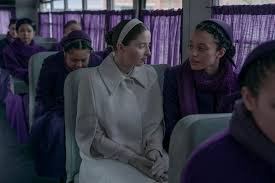
The Testaments is set within an elite girls’ training academy in Gilead, overseen by the formidable Aunt Lydia, powerfully portrayed by Ann Dowd. Here, young women are indoctrinated not to read or think, but to obey. They are prepared for marriage at a young age, often to significantly older men. Agnes, played by Chase Infinity, is a seemingly obedient daughter of a Gilead commander, while Daisy (Lucy Halliday), a rebellious newcomer, harbors a potentially dangerous secret.
The series also features returning characters like Rita (Amanda Brugel) and a cameo from Atwood herself. The question of Daisy’s true identity – could she be Nicole, and will the sisterly connection to Agnes be revealed as in the novel? – adds to the suspense. Halliday’s resemblance to Elisabeth Moss fuels speculation, reminding us that anything is possible on television.
A Subtler, Yet Equally Powerful, Narrative
While The Handmaid’s Tale was characterized by visceral violence and the immediate threat of life and death, The Testaments adopts a more subtle approach. It explores the unchecked entitlement of the powerful, the self-subjugation of some women in exchange for comfort, and the insidious ways oppression poisons the soul. Over its ten episodes, the series reveals how men protect their own, how victims are blamed, and how communication is suppressed to prevent rebellion.
Echoes of Today’s World
The Testaments feels as culturally relevant in 2026 as The Handmaid’s Tale did in 2017. The erosion of abortion rights, the pressure on women to return to traditional roles, and the disturbing revelations of sex trafficking – all echo the themes explored in Atwood’s dystopian world. The rise of the “trad wife” movement on TikTok and the dangerous ideologies propagated by the internet manosphere, exemplified by figures like Justin Waller, further blur the lines between fiction and reality. Waller’s pronouncements on female subservience could easily be a decree within the walls of Gilead.
As The Testaments demonstrates, the fight for autonomy and equality is far from over. The series serves as a stark reminder of the fragility of freedom and the importance of vigilance in the face of oppression.
Learn more about Margaret Atwood’s work and the themes explored in her novels: The Margaret Atwood Society