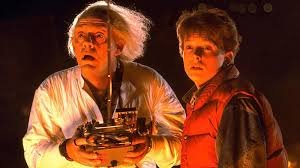
Michael J. Fox: The Enduring Legacy of Back to the Future
More than four decades after its debut, Back to the Future remains a cornerstone of pop culture. The time-traveling adventure continues to captivate audiences with its blend of heart, humour, and sci-fi excitement. A significant portion of the film’s success is attributed to the script penned by Bob Gale, based on a story developed with director Robert Zemeckis.
The franchise has expanded into animated series and comic books, yet attempts at reboots or sequels have been largely unsuccessful, largely due to the exceptionally high standard set by the original films. However, Gale spearheaded the development of Back to the Future: The Musical, which isn’t a reboot or continuation, but rather a reimagining of the film’s core elements, aiming to evoke the same emotional response in audiences.
From Script to Stage: A Journey Through Time
The making of the musical is chronicled in A Future on Stage: The Making of a Broadway Musical, now available on Digital. Looking back, Gale and his collaborators never anticipated the fervent following the movie would garner. However, he recalls a pivotal moment during a conversation with MovieWeb when he realized the project had potential: “You never truly know how a movie will be received. We had previously made I Want to Hold Your Hand and Used Cars, both of which received fantastic sneak preview reactions, with studios predicting their success. Yet, they ultimately failed. Failure, surprisingly, can be a valuable learning experience, keeping you grounded.
Those films taught us we knew how to craft a funny movie, but couldn’t guarantee an audience.
The Casting of a Legend: Michael J. Fox
A fascinating piece of Back to the Future lore is the initial casting of Eric Stoltz as Marty McFly. However, when Stoltz didn’t quite embody the spirit the filmmakers envisioned, the role was recast with Michael J. Fox. Gale recounts:
“Sid Sheinberg, the President and COO of MCA, essentially gave us the green light to cast Michael J. Fox, with the understanding that if it didn’t work, we could revert to the original plan. He didn’t believe we’d take him up on it, confident that Eric Stoltz would excel, but he was wrong. To his credit, he honoured his word. He acknowledged it wasn’t working and approved our decision to bring in Michael J. Fox, a move he initially hesitated on, given Michael’s status as the star of the second-highest-rated TV series in America.”
The turning point came during filming at Whittier High School. “During the Enchantment Under the Sea Dance scene, we noticed a stark difference. With Eric Stoltz, no one recognized him during Christmas break. But once word spread that Michael J. Fox was on set, crowds gathered, seven deep, just to catch a glimpse of him. Bob and I realized then that Michael was a genuine star, and people would come to see him on the big screen.”
A Phenomenon is Born
The overwhelmingly positive reaction at the first sneak preview, even with unfinished visual effects, prompted Sheinberg to move the release date to the July 4th weekend. After an additional million dollars to complete the effects, the film became a cultural phenomenon.
The Musical’s Success: Replicating the Magic
The success of Back to the Future: The Musical mirrored the original film’s reliance on audience reactions. Gale explains: “We tested the show in Manchester, initially running nearly three hours. Through nightly adjustments, cutting 35-40 minutes, we honed it to a little over two hours, observing that removing certain songs didn’t impact the audience’s response.
The premiere in Manchester drew fans from around the globe, including attendees from Japan, Kansas City, and Germany. However, it was the reaction of two women, co-presidents of the Michael J. Fox fan club in the UK, that truly solidified Gale’s belief in the musical’s success. They declared that while Michael J. Fox was irreplaceable, the actor in the musical captured the essence of Marty McFly after just seven or eight minutes.
The Science of Time Travel and Lasting Influence
Back to the Future’s influence extends beyond entertainment, even shaping the way time travel is depicted in other projects. Even Avengers: Endgame, a box office titan, acknowledges the rules of time travel established in Back to the Future (though Scott Lang playfully dismisses them as “bullsh*t”). Gale reflects on the film’s approach: “We were inspired by 1960’s The Time Machine, which maintained the time machine’s location in space. We acknowledged the absurdity of ignoring Earth’s movement, but Doc Brown was clever enough to account for it.”
The Future of the Franchise
While the original film remains influential, Gale believes a sequel to the musical is unlikely. He explains that Back to the Future II lacks the core love story essential for a successful musical. However, Part III, with its strong romantic element, might be a viable option. He also notes that the magic of the musical lies in the live experience, something a film adaptation couldn’t replicate.
A Future on Stage: The Making of a Broadway Musical is currently available to rent on Prime Video. A North American tour of Back to the Future: The Musical is underway.