Mallorca: An Easter Beyond Bunnies and Eggs
While many associate Easter with chocolate bunnies and colorful eggs, Mallorca offers a distinctly different experience. The spirit of Easter, or Pascua, has arrived on the island, but alongside familiar treats, you’ll find deeply rooted traditions that set it apart from celebrations elsewhere.
From Jaia Corema to Monas de Pascua: Unique Mallorcan Traditions
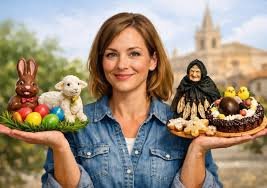
German Easter traditions, popularized by retailers like Müller and Lidl, have certainly made their mark on Mallorca. However, the island boasts its own unique customs. Forget the Easter bunny – here, children anticipate the arrival of the Jaia Corema, the Fasting Witch. Throughout Lent, children symbolically ‘cut off’ one of her seven legs each week, a playful reminder of the period of abstinence. You’ll find handmade versions of this slightly spooky figure adorning many refrigerators!
Once Easter Sunday arrives, the focus shifts to indulging in traditional Mallorcan delicacies. Panades (savory pastry pies), robiols (sweet filled pastries), and crespells (delicious almond cookies often shaped like stars, flowers, or hearts) are staples in many households. Often, these treats are prepared together as a family, mirroring the tradition of baking cookies during Advent in Germany.
And then there are the monas de Pascua, elaborate chocolate creations originating from the Catalan-Valencian region. Mallorcan pastry chefs compete to create the most impressive designs, and children traditionally receive them from their godparents on Easter Sunday, often accompanied by a special outing.
A Different Atmosphere: Solemnity and Community
The overall atmosphere of Easter in Mallorca differs significantly from the often lighthearted and playful celebrations in Germany. While German Easter is increasingly associated with family time and the end of winter, Mallorca’s Easter retains a stronger sense of solemnity and religious significance, reflecting its biblical roots.
This is particularly evident during Semana Santa (Holy Week), when processions fill the streets, brotherhoods carry religious statues, and the sound of drums and music creates a reverent atmosphere. Many Spaniards return to their hometowns during this time to experience the festivities with family and the community. Even Mallorcans who reside elsewhere on the mainland often return to the island to reconnect with their roots.
While Andalusia is known for its particularly fervent religious displays, Mallorca’s Easter celebrations are still deeply rooted in tradition and offer a more intense experience than many find in Germany. Passion plays also remain an important part of the local cultural heritage in some villages.
Osterfeuer? Not in Mallorca!
Unlike some other regions, you won’t find Easter bonfires (Osterfeuer) in Mallorca. The focus remains on liturgical traditions and communal experiences.
Season Start: Easter as a Catalyst for Tourism
For many Mallorcans, Easter also marks the beginning of the tourist season. While visitors relax and enjoy the sunshine, a large portion of the island’s population prepares for the busy months ahead, eager to welcome the influx of tourists. Easter is, in many ways, a warm-up for a new season of record-breaking visitor numbers.
Learn more about Spanish culture and traditions at Spain.info.
For insights into Mallorcan cuisine, explore Mallorca.com’s food and drink section.