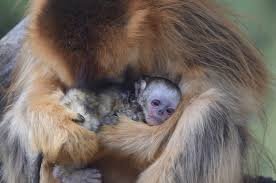
A Historic Birth at Beauval Zoo: First Golden Snub-Nosed Monkey Born Outside Asia
Beauval Zoo has witnessed a truly historic event! On the morning of March 11th, a precious golden snub-nosed monkey was born. Dedicated keepers had been closely monitoring the pregnancy, and fortunate visitors were able to witness this remarkable moment. The mother, Jindou (meaning “golden seed,” born March 29, 2018), is doing wonderfully.
A Global Conservation Milestone
This birth represents a world first: it’s the first golden snub-nosed monkey ever born in a zoological park outside of Asia. This incredible achievement is a testament to the success of the international conservation and research project in collaboration with China.
Golden snub-nosed monkeys first arrived at Beauval Zoo in April 2025, marking another historic milestone as the first representatives of their species to be welcomed outside of Asia. The arrival of two females (Jindou and Jinhua) and a male (Jinbao) saw them quickly adapt to their new environment. Under the guidance of experts from the Shanghai Wild Animal Park in China, keepers soon observed mating behaviours, hinting at potential births in the coming months.
A Healthy Newborn and Dedicated Care
After attentive care and patient waiting, the baby was finally born on March 11, 2026! The newborn is in excellent health and was immediately held close to its mother, sheltered against her chest. Currently, under the direction of golden snub-nosed monkey experts from the Shanghai Wild Animal Park, Beauval Zoo’s keepers are providing exceptional care.
Keepers are carefully monitoring the baby’s development, as the first few days after birth are crucial for primates – especially for first-time mothers like Jindou.
Come and See Them!
Don’t miss the opportunity to see the golden snub-nosed monkeys and the newest addition, born on March 11th! They reside within the Chinese Highlands area, near the giant panda twins Yuandudu and Huanlili.
Understanding Golden Snub-Nosed Monkey Reproduction
Golden snub-nosed monkeys exhibit a polygynous mating system, meaning the male within a harem mates exclusively with the females of his group. Females reach sexual maturity between 4 and 5 years old, while males mature around 7 years. The breeding season occurs between August and October, with births typically taking place between March and June. Gestation lasts approximately 6 to 7 months.
Females usually give birth to a single infant every two years, and babies are born with lighter-coloured fur. The mother provides the majority of care, although the male can also assist by protecting and grooming the young. Weaning typically occurs around one year of age, though nursing can continue for longer. Female golden snub-nosed monkeys practice “allonursing,” meaning that young can be nursed by females other than their mothers. This cooperative care behaviour is believed to increase the chances of infant survival.
In zoological parks, golden snub-nosed monkeys have a lifespan of approximately 25 to 30 years.
Visit Beauval Zoo
ZooParc de Beauval
Avenue du Blanc
41110 Saint-Aignan
Open year-round, 7 days a week from 9:00 AM, including holidays.
Contact: 02 54 75 5000
Learn more about golden snub-nosed monkeys and conservation efforts at World Wildlife Fund.