Meryl Streep: A Reign of Cinematic Excellence
For over five decades, Meryl Streep has captivated audiences with her unparalleled talent and remarkable range. She isn’t just an actress; she’s a cultural icon, a benchmark for acting prowess, and a consistently compelling presence on screen. From heartbreaking dramas to hilarious comedies, Streep’s ability to embody diverse characters with authenticity and nuance is truly exceptional. This article delves into the life and career of this cinematic legend, exploring the key moments and roles that have cemented her status as one of the greatest actors of all time.
Early Life and Breakthrough
Born Mary Louise Streep in Summit, New Jersey, in 1949, her passion for acting blossomed early. She honed her skills at Vassar College and Yale School of Drama, quickly gaining recognition for her stage work. Her early film roles in the 1970s, including *Julia* (1979) and *The Deer Hunter* (1978), showcased her potential, earning her early Academy Award nominations. However, it was her performance in *Kramer vs. Kramer* (1979) that truly launched her into superstardom, winning her the Academy Award for Best Supporting Actress.
A Career Defined by Versatility
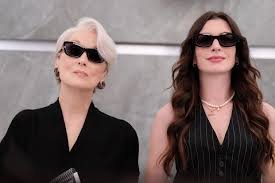
What sets Meryl Streep apart is her astonishing versatility. She doesn’t simply *play* characters; she *becomes* them. This is evident in the sheer breadth of her filmography. From the Polish immigrant in *Sophie’s Choice* (1982), a role that earned her a second Academy Award, to the formidable Miranda Priestly in *The Devil Wears Prada* (2006), Streep consistently challenges herself and her audience. Other notable performances include *Out of Africa* (1985), *Death Becomes Her* (1992), *The Bridges of Madison County* (1995), and *Adaptation.* (2002). She’s equally comfortable in smaller, independent films like *Julie & Julia* (2009) and *Florence Foster Jenkins* (2016).
Recent Work and Continued Acclaim
Streep’s career hasn’t slowed down in recent years. She continues to take on challenging and diverse roles, proving her enduring relevance. Her performance in *The Post* (2017) earned her a record-breaking 21st Academy Award nomination. She’s also embraced television, winning a Primetime Emmy Award for her portrayal of Margaret Thatcher in the miniseries *The Iron Lady* (2011) – a role that also garnered her another Academy Award nomination. More recently, she appeared in *Little Women* (2019) and *Don’t Look Up* (2021), demonstrating her continued commitment to compelling storytelling. Her work consistently receives critical acclaim, solidifying her position as a leading figure in the entertainment industry.
Legacy and Influence
Meryl Streep’s impact on acting is immeasurable. She has inspired generations of actors with her dedication to craft, her fearless choices, and her unwavering commitment to authenticity. Her ability to disappear into a role has set a new standard for performance. She’s a role model not only for aspiring actors but for anyone striving for excellence in their field. Her influence extends beyond the screen, as she is also a vocal advocate for social justice and equality. She remains a powerful and inspiring figure, and her legacy will undoubtedly continue to shape the landscape of cinema for years to come. You can learn more about her career and awards on the official Academy Awards website: [https://www.oscars.org/](https://www.oscars.org/).