
Trump Demands Allies Step Up in Strait of Hormuz
WASHINGTON (AP) — As President Donald Trump navigates a potential exit from the conflict with Iran, he’s signaling a significant shift in responsibility: expecting global allies to shoulder the burden of securing the crucial Strait of Hormuz. This comes after initiating a military campaign without prior consultation with these same allies.
The President has expressed increasing frustration with Europe’s perceived lack of support for the U.S.-Israeli war effort. He’s also downplaying the disruptive impact his decisions have had on global oil markets, despite Iran’s success in largely controlling passage through the Strait of Hormuz, even while Trump claims Iran has been “decimated.”
Social Media Scolding and Calls for Self-Reliance
Trump took to social media Tuesday, criticizing France and Britain, urging them to “Go get your own oil!” and “start learning how to fight for yourself.” He specifically called out the United Kingdom for refusing to participate in what he termed the “decapitation of Iran,” suggesting they “build up some delayed courage” and “just TAKE” control of the Strait.
He also accused France of being “very unhelpful” by denying overflight access for planes carrying military supplies to Israel.
Administration Echoes the Sentiment
Top administration officials have echoed the President’s sentiments. Secretary of State Marco Rubio, Treasury Secretary Scott Bessent, and Defense Secretary Pete Hegseth have all voiced criticism of NATO allies for their slow response and lack of full participation in the war. This coordinated messaging has raised concerns about the future of the alliance, which Trump has previously questioned.
Defense Secretary Calls for Shared Responsibility
Defense Secretary Pete Hegseth argued that the U.S. has “done the heavy lifting” and that countries reliant on oil flowing through the Strait should be prepared to “step up” on this “critical waterway.” He pointedly noted that the U.S. Navy shouldn’t be solely responsible, questioning the readiness of the “big, bad Royal Navy.”
Trump Predicts Swift End to Attacks
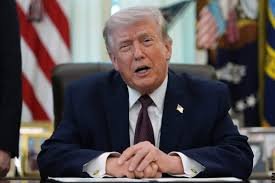
In an Oval Office exchange, Trump stated that protecting the Strait would be the responsibility of other nations and predicted that U.S. attacks against Iran would conclude within two to three weeks. “That’s not for us,” he said. “That’ll be for France. That’ll be for whoever’s using the strait.”
Market Reaction and European Unease
Despite the sharp rhetoric, U.S. investors reacted positively, with the S&P 500 surging 2.9% – its largest gain since last spring. This swing in sentiment suggests a growing hope for a swift resolution to the conflict.
However, Trump’s criticism of NATO has left Europe uneasy. Spain and France have restricted U.S. access to their airspace and military facilities. While they’ve agreed to contribute to an international coalition to secure the Strait after the conflict ends, the specifics of their involvement remain unclear.
European Response and Diplomatic Efforts
France and the U.K. have sought to downplay Trump’s comments, reaffirming their commitment to the alliance. The U.K. announced increased missile and air defense systems for Gulf nations and extended the deployment of its Typhoon fighter jets in Qatar.
Analysts suggest Europe has strong incentives to de-escalate the conflict, citing the potential for further refugee crises and the threat to vital trade routes like the Red Sea. The International Crisis Group highlights the need for diplomatic offramps and a maritime stabilization mission tied to a ceasefire.
Experts believe Europe should focus on the economic consequences of the war, prioritize diplomacy, and offer Trump a path to claim victory. As Jeremy Shapiro of the European Council on Foreign Relations writes, “Trump will claim victory no matter how this war ends. Europeans should want that to happen sooner rather than later.”
Associated Press writers Ben Finley, Darlene Superville and Konstantin Toropin in Washington and Brian Melley in London contributed to this report.



